
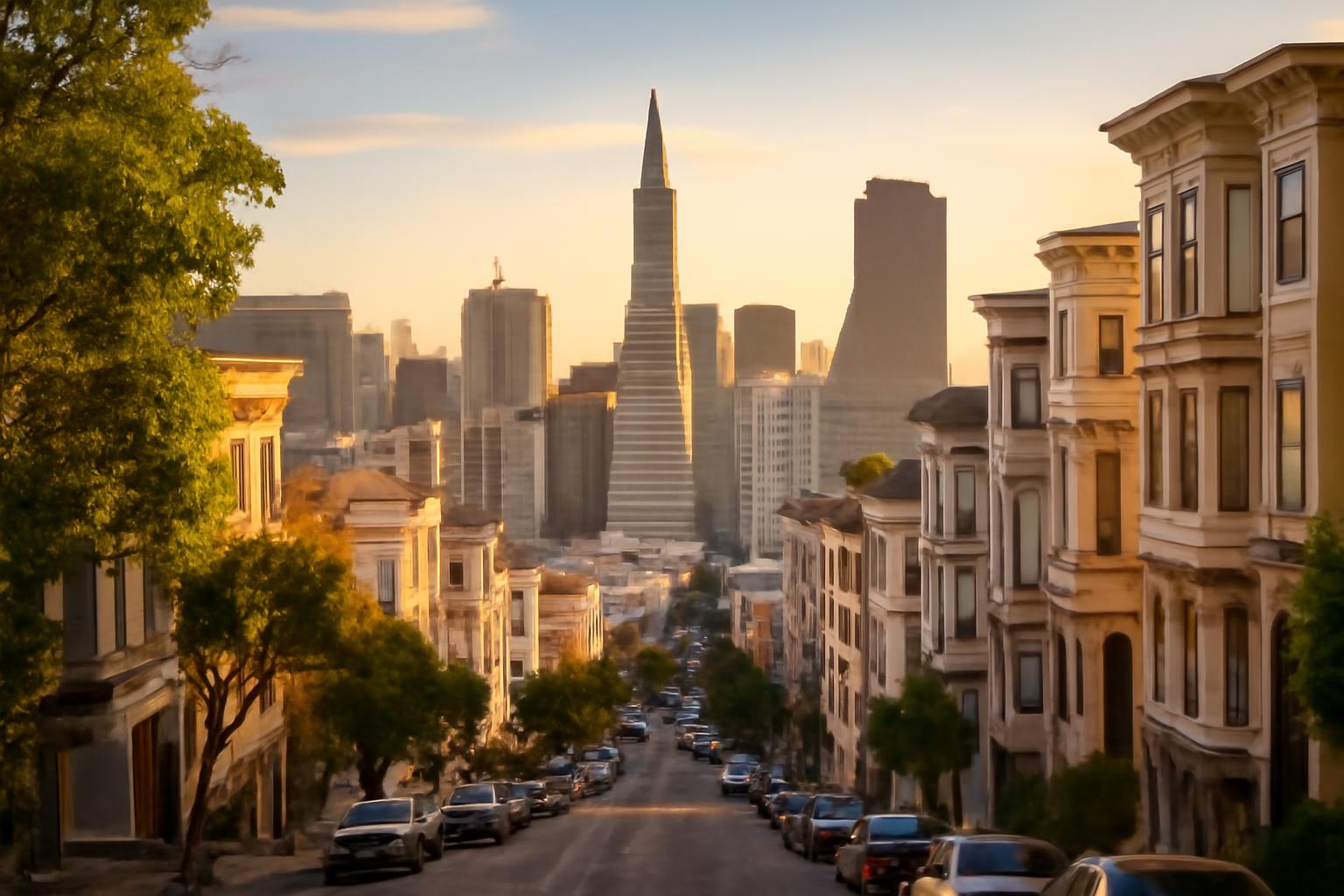
If you want the best time of day for San Francisco neighborhoods, the most useful answer is not a single hour. In practice, “best” depends on what you want from the neighborhood: sun, warmth, views, street life, food, nightlife, or an easy first visit that does not turn into a weather chase.
That matters more in San Francisco than in many cities because neighborhood conditions can change fast. A good plan is usually a time window matched to a neighborhood type, with a backup if the marine layer or wind does something unhelpful.
What best time of day san francisco neighborhoods means
In practical terms, this topic means choosing when to visit a neighborhood so it fits your goal better. For one traveler, “best” means bright sun and the warmest walk. For another, it means lively restaurants at night. For someone else, it means a calmer, flatter, simpler stretch that works well on a first trip.
The key complication is San Francisco’s microclimate pattern. One neighborhood can be gray and windy while another is sunny, and the difference is often strongest between western neighborhoods near the ocean and more sheltered inland or eastern ones. A neighborhood-by-neighborhood weather guide describes the Mission, Castro, Noe Valley, and Potrero Hill as more protected from ocean fog than the Sunset and Richmond, and it says fog often burns off between about 11:00 a.m. and 1:00 p.m., depending on location and conditions. See Coffee in the Sun’s guide to San Francisco sunshine and fog patterns.
So the phrase “best time of day” usually breaks into four separate questions:
- Best for weather: When is this neighborhood most likely to feel sunny, clear, or comfortable?
- Best for views and photos: When are visibility and light most favorable?
- Best for activity: When are cafés, bars, shops, or public spaces most alive?
- Best for ease: When can you enjoy the area with the least friction from fog, wind, hills, or backtracking?
Those are not always the same answer. A waterfront neighborhood may look clearest in the middle of the day but feel colder than an inland neighborhood. A nightlife area may be most fun in the evening even if that is not its warmest time. A park may be best once the sun reaches it, not when the surrounding district first brightens.
Activity also matters as much as weather. San Francisco Travel says SoMa is the main area for large clubs and venues, while North Beach, the Mission, and the Castro are known for bars; it also notes that Union Square holds many of the city’s major hotels and is a major transit hub. That means “best time” can be driven by neighborhood energy as much as by fog. See San Francisco Travel’s official neighborhoods guide.
The practical takeaway is simple: do not ask for the best time of day for every San Francisco neighborhood in one lump. Ask instead, “Best time for this kind of neighborhood, for this purpose, on this kind of day?”
How best time of day san francisco neighborhoods works
A workable answer usually comes from five layers, in this order: season, neighborhood type, daily weather pattern, block orientation, and your actual goal.
Start with the season. One local travel guide says San Francisco’s most favorable overall visiting periods are fall—especially September—and spring, while summer often brings fog, wind, and temperatures around 60 to 65°F. The same guide also warns that wind often picks up later in the day and recommends dressing in layers. Even if you do not adopt those month-by-month preferences exactly, the larger point is solid: the same neighborhood can feel very different in June than in October. See Where’s Jessie B.’s local San Francisco planning tips.
Next comes neighborhood type.
- Inland and more sheltered neighborhoods usually give you better odds of warmth and sun for outdoor wandering.
- Western and coastal neighborhoods usually require more patience and lower expectations if your goal is blue sky.
- Waterfront neighborhoods can improve visually after fog lifts but still feel exposed.
- Nightlife and dining districts may be “best” in the evening regardless of weather.
Then comes the daily weather pattern. A common San Francisco rhythm is low clouds or fog earlier, some clearing by late morning or midday in some areas, then more wind or returning fog later, especially near the water. That same neighborhood-by-neighborhood sun guide notes that Marina mornings are often foggier and afternoons clearer, and it gives specific street-level examples such as Valencia Street’s east side getting more morning sun and its west side more afternoon sun, while Dolores Park tends to work from mid-morning through sunset. See Coffee in the Sun’s neighborhood timing examples.
That is why “11 to 4” is often more useful than “go at noon.” In San Francisco, precision can be fake. You are usually not choosing a perfect moment. You are choosing a window with better odds.
After that, adjust for the block itself. Street orientation, hill exposure, and whether you are tucked inside a commercial corridor or out on open water can matter almost as much as the neighborhood label. A sunny commercial street in Noe Valley or the Mission can feel completely different from a more exposed ridge, even within the same district.
Finally, tie the timing to your purpose:
- If you want comfortable outdoor time, bias toward sheltered neighborhoods and a late-morning-to-late-afternoon window.
- If you want bridge or bay views, bias toward a flexible midday or afternoon slot rather than a fixed early start.
- If you want restaurants, bars, and people out, bias toward evening in the neighborhoods built around that.
- If you want simple logistics, choose one zone, keep walks directional, and avoid bouncing between a foggy west-side plan and a sunny inland plan unless you are prepared to pivot.
In other words, the topic works from broad to narrow: season sets the baseline, the neighborhood type sets the likely pattern, the hour changes the odds, and your goal chooses the winner.
The main approaches
There is no single best approach for everyone. Most readers are really choosing among a few different planning styles.
1. Weather-first: choose the neighborhood that gives you the best odds
If your main goal is “I want the nicest-feeling outdoor time,” the strongest approach is to favor the neighborhoods that multiple local and travel sources repeatedly describe as sunnier or less wind-prone. One local real-estate roundup of San Francisco microclimates lists Bernal Heights, the Mission, Noe Valley, South Beach, SoMa, Mission Bay, and Potrero Hill/Dogpatch as neighborhoods with longer sunny periods and less wind than many other parts of the city; the author also says late-afternoon walks in Upper Noe Valley often call for sunglasses plus a light jacket. See Inside SF Real Estate’s roundup of sunnier neighborhood weather.
This approach is best when your day revolves around walking, park time, outdoor dining, or simply avoiding the classic mistake of standing in cold wind wondering why the forecast looked better on your phone.
A practical version looks like this:
- Mission / Dolores area: strongest bet from late morning into late afternoon
- Noe Valley: especially strong for a late-afternoon walk
- Potrero Hill / Dogpatch / Mission Bay / South Beach: good candidates when you want more sun than the west side is likely to offer
- SoMa: useful when you want an urban area that can support both outdoor movement and indoor backup stops
The tradeoff is that weather-first planning can miss what makes San Francisco feel social at night. If you spend all your time optimizing for sun, you may end up in the right climate but the wrong mood.
2. Coast-or-west-side-first: go for mood, not certainty
If your goal is ocean atmosphere, foggy avenues, surf-adjacent walks, or the western neighborhoods themselves, you are making a different choice. This approach is not wrong; it is just less predictable.
Travel guides and local commentary consistently describe the Sunset and Richmond as cooler and foggier than inland neighborhoods, especially in summer. One local guide warns that neighborhood weather changes from morning to evening, says the Sunset and Richmond are among the foggiest parts of the city, and recommends layers because afternoon wind can build even when the rest of the day seems mild. See Where’s Jessie B.’s guide to San Francisco microclimates.
That leads to a simple rule: if you want the best chance of a pleasant west-side visit, give yourself a late-morning to afternoon window and keep expectations loose. But if what you actually want is the misty, cinematic side of San Francisco, then a grayer hour may be the point, not the problem.
This approach works well for people who value atmosphere over certainty. It works less well if you will be disappointed unless you get a bright, warm outdoor session.
3. Waterfront-first: split the difference between views and exposure
The Marina, Crissy Field, the Embarcadero, and similar edges of the city deserve their own category. These areas can be spectacular, but they are exposed. Even when skies clear, the waterfront can feel cooler and windier than inland neighborhoods.
That means the best time here is often a compromise. Midday to afternoon may improve visibility, but later in the day you can still run into wind. Morning may be quieter, but not always clearer. The right move is to keep waterfront plans flexible, wear a layer, and avoid turning a scenic route into a rigid test of endurance.
This is a good approach if your priority is iconic scenery and open-air walking. It is weaker if your definition of “best” is warmth.
4. Activity-first: choose neighborhoods by when they come alive
Sometimes the weather question is secondary. If you mainly want bars, restaurants, live streets, or evening character, the best time of day is driven by the neighborhood’s social rhythm.
San Francisco Travel’s official neighborhood guide says SoMa is the key area for large clubs and venues, while North Beach, the Mission, and the Castro are known for bar activity. See San Francisco Travel’s neighborhood nightlife overview.
That gives you a clear practical pattern:
- North Beach: strong evening choice for dinner, bars, and street life
- Castro: evening makes the most sense if you want energy and activity
- SoMa: afternoon can work for museums or other indoor stops, with evening for nightlife
- Mission: late morning through afternoon if you want warmth; evening if you want food and bars
This approach is ideal when you care more about atmosphere and options than about catching the city at its warmest. The tradeoff is obvious: the most active hour is not necessarily the nicest weather hour.
5. Flexibility-first: build your day around a pivot
For many visitors, this is the smartest approach of all. Instead of asking for one perfect neighborhood at one perfect time, you create a primary plan and a backup.
For example:
- If the coast is socked in, start inland.
- If the inland neighborhoods are already bright by late morning, stay there longer.
- If the waterfront clears nicely by midday, move there for your scenic walk.
- If the evening matters most, use the afternoon for indoor or easy transit-connected stops, then shift to your chosen nightlife district.
This approach is especially strong in San Francisco because it respects the city’s reality: the map is fixed, but the feel is not. It also reduces backtracking and decision fatigue. You do not need the perfect prediction. You need a plan that still works if the first prediction is slightly off.
A practical process
If you want a reliable answer for your own trip, use this process.
Step 1: Decide what “best” means for this outing
Pick one primary goal:
- sun and comfort
- views and photos
- neighborhood energy
- easy first-time wandering
- food and drinks
- a low-effort half day
Do not pick all six. The more goals you combine, the more generic your answer becomes.
Step 2: Sort the neighborhood into the right bucket
Use a simple mental map:
- Sunny inland / sheltered: Mission, Noe Valley, Bernal, Potrero, Dogpatch, Mission Bay, South Beach, parts of SoMa
- Foggier west side: Sunset, Richmond
- Exposed waterfront: Marina, Crissy Field, Embarcadero
- Evening-energy districts: North Beach, Castro, SoMa, Mission
You do not need a master list of every neighborhood in the city. You need the right category.
Step 3: Choose a time window, not a minute
A good San Francisco plan usually looks like one of these:
- Late morning to mid-afternoon: best general outdoor window
- Mid-afternoon to early evening: good for sunnier inland walks and some waterfront visits
- Evening: best for nightlife districts and dining-focused plans
If you force a rigid minute-by-minute schedule, you create a plan that is more fragile than the city itself.
Step 4: Build around a primary stop and one backup
Examples:
- Primary: Dolores Park and the Mission from late morning through mid-afternoon Backup: SoMa museum or café cluster if weather or energy changes
- Primary: Crissy Field or Marina in the afternoon Backup: nearby indoor stop or transit exit if wind rises
- Primary: Outer Sunset after late morning if it looks promising Backup: switch inland instead of waiting for a miracle
The backup should not be across the entire city unless you truly want the transit time.
Step 5: Stack your day so the timing supports the neighborhood
A few practical pairings work better than random hops:
- neighborhood lunch before a waterfront walk
- park or view stop before dinner in a lively district
- indoor museum or shopping stop before an evening neighborhood stroll
- flatter or transit-connected segments after your longest walk, not before it
This matters because San Francisco penalties are rarely dramatic. They are cumulative: a windy detour, a hill you did not need, a transfer you could have avoided, a neighborhood that is technically fine but mistimed.
Step 6: Dress for the place you are ending, not the place you started
This is one of the easiest improvements you can make. If your day ends near the water or after sunset, bring the extra layer from the start. If your day includes a neighborhood known for sun and another known for exposure, dress for both.
Step 7: Make one same-day judgment call
The most useful “best time” decision often happens on the day itself. Before you leave, check how the coast and your target neighborhood actually look, then commit. In San Francisco, a modest same-day adjustment often beats a beautifully researched but inflexible itinerary.
Here are three example templates.
Template A: weather-first day Start in the Mission or near Dolores Park in late morning, stay through a relaxed lunch and walk, then decide whether you want to keep the afternoon in another sunny inland neighborhood or shift to a scenic edge if it has cleared.
Template B: waterfront-first day Use lunch inland or in a sheltered district, then move to the Marina, Crissy Field, or Embarcadero in midday or afternoon. Keep the return simple and do not add unnecessary uphill loops.
Template C: evening-first day Spend the earlier part of the day on indoor stops, transit-friendly errands, or a short sunny walk. Save your main neighborhood experience for North Beach, Castro, SoMa, or another evening district once the city is socially awake.
Common mistakes and tradeoffs
The biggest mistake is asking a weather question when you really have an activity question.
If what you actually want is dinner, bars, and people out, then North Beach at night may be “better” than a sunnier neighborhood at 2 p.m. If what you want is a comfortable park session, the reverse may be true. Many disappointing San Francisco days come from solving the wrong problem.
Another mistake is assuming that “clearer” and “more comfortable” are the same thing. They often are not. A waterfront area may look better once the fog lifts and still feel colder than an inland neighborhood. That does not make the waterfront a bad choice. It just means that visual payoff and physical comfort are separate variables.
A third mistake is chasing a universal answer instead of accepting neighborhood types. You do not need to memorize 19 neighborhoods or every local subdistrict. Most visitors do better with a short framework: sheltered inland, exposed waterfront, foggier west side, or evening-energy district.
A fourth mistake is trusting old internet advice as if conditions never change. For example, a Tripadvisor thread about San Francisco areas to explore at night is now 16 years old and is made up of traveler opinions rather than current official guidance or fresh data. It may still contain a few useful instincts about where activity clusters, but it should not be treated as a current map of what to do or avoid. See Tripadvisor’s older San Francisco “Areas to explore at night” thread.
A fifth mistake is overfitting to block-level advice. Yes, block orientation can matter. Yes, some streets catch morning sun better than others. But that becomes useful only after you have chosen the right neighborhood and time window. If you start by obsessing over one café terrace or one street face, you can lose the larger advantage.
The real tradeoffs look like this:
- Best odds of sun vs. best neighborhood energy
- Best visibility vs. least wind
- Most iconic scenery vs. highest comfort
- One perfect guess vs. a flexible plan with backup
- Covering lots of ground vs. having one neighborhood actually feel good
There is also a subtle tradeoff between ambition and flow. In San Francisco, a day that respects timing often feels better than a day that covers more names on a list. You will usually remember the neighborhood that felt right, not the one you forced in because it was nearby on the map.
How to choose the next step
If you need a decision right now, use this quick filter.
Choose a late-morning to late-afternoon inland plan if:
- you want the best odds of sun and comfort
- you like parks, cafés, and walking
- you would be annoyed by fog or wind
- you want a low-drama first answer
Your strongest candidates are the Mission, Dolores Park, Noe Valley, Potrero Hill, Dogpatch, Mission Bay, South Beach, or similar sheltered neighborhoods.
Choose a waterfront midday-to-afternoon plan if:
- bridge, bay, or open-view walking is the point
- you can handle cooler air and wind
- you are willing to bring a layer
- you do not mind treating comfort as secondary to scenery
Choose a west-side late-morning-or-later plan if:
- you want the ocean-side San Francisco mood
- you accept that visibility may vary
- your idea of success is the neighborhood itself, not guaranteed sun
Choose an evening activity plan if:
- restaurants, bars, and street life matter most
- you want a clearer social answer than a weather answer
- you are pairing the neighborhood with dinner or nightlife
If you are staying centrally, Union Square is a practical launch point because San Francisco Travel says it has many major hotels and functions as a major transit hub, which makes timing pivots easier than if you start from a more isolated base. See San Francisco Travel’s note on Union Square hotels and transit.
The most sensible next step for most readers is this:
- Pick one goal for tomorrow.
- Pick one neighborhood type that fits it.
- Give yourself a two- to four-hour window, not a precise minute.
- Name one backup in case the weather shifts.
- Bring one extra layer.
- Stop trying to solve the whole city at once.
If you do only that, you will already be making a better San Francisco timing decision than most generic “best neighborhood” lists allow.
What should a beginner know about best time of day san francisco neighborhoods?
A beginner should know that there is no single citywide best hour. San Francisco is more manageable when you think in neighborhood types and time windows.
For a first pass, keep it simple:
- use late morning through afternoon for sunnier inland neighborhoods
- use evening for neighborhoods you want mainly for food, bars, or energy
- treat the waterfront and west side as more weather-sensitive
A beginner should also avoid trying to do the coast, a steep interior neighborhood, and a nightlife district all in one tightly timed arc. The city is compact, but timing friction adds up. A shorter plan with one good pivot usually feels better than a heroic schedule.
Finally, beginners do best when they plan for adaptability. If you can change one neighborhood before leaving your hotel, you do not need perfect prediction.
What are the main risks of best time of day san francisco neighborhoods?
The main risks are not dramatic; they are practical.
First, you can pick the right neighborhood for the wrong reason. A nightlife district may be excellent after dark and underwhelming at midday. A scenic waterfront may be visually rewarding but physically colder than you expected.
Second, you can mistake a forecast for a guarantee. In San Francisco, a “nice day” forecast does not mean every neighborhood will feel equally nice.
Third, you can waste time backtracking between mismatched plans. Many visitors lose more enjoyment to bad sequencing than to bad weather.
Fourth, you can rely too heavily on dated or anecdotal advice. Older forum threads about nighttime wandering can still suggest where activity clusters, but they are not a current safety map or a full decision framework. See Tripadvisor’s old forum discussion on areas to explore at night.
The safest practical response is not paranoia. It is humility: use neighborhood timing as a guide, not as a promise.
How do you evaluate best time of day san francisco neighborhoods options?
Evaluate each option against five questions:
-
What is my main goal? Sun, views, energy, food, photography, or ease?
-
What kind of neighborhood is this? Sheltered inland, foggier west side, exposed waterfront, or evening district?
-
What is the best time window, not exact time? Late morning to afternoon, afternoon to early evening, or full evening?
-
What is the tradeoff? Better light but more wind? Better activity but less warmth? Better views but more exposure?
-
What is my backup? If this neighborhood does not match the day, where do I go without wrecking the plan?
A quick scoring method works well. Give each option a simple high / medium / low rating for:
- weather odds
- comfort
- neighborhood energy
- scenic payoff
- ease of getting there and leaving
The best option is usually the one with the fewest weak spots for your goal, not the one that wins on a single dimension.
If you are still undecided, default to the easiest strong answer: a sheltered inland neighborhood from late morning through afternoon, or an activity-driven neighborhood in the evening. That will not solve every edge case, but it will solve most visitor days well enough to keep the city enjoyable.