
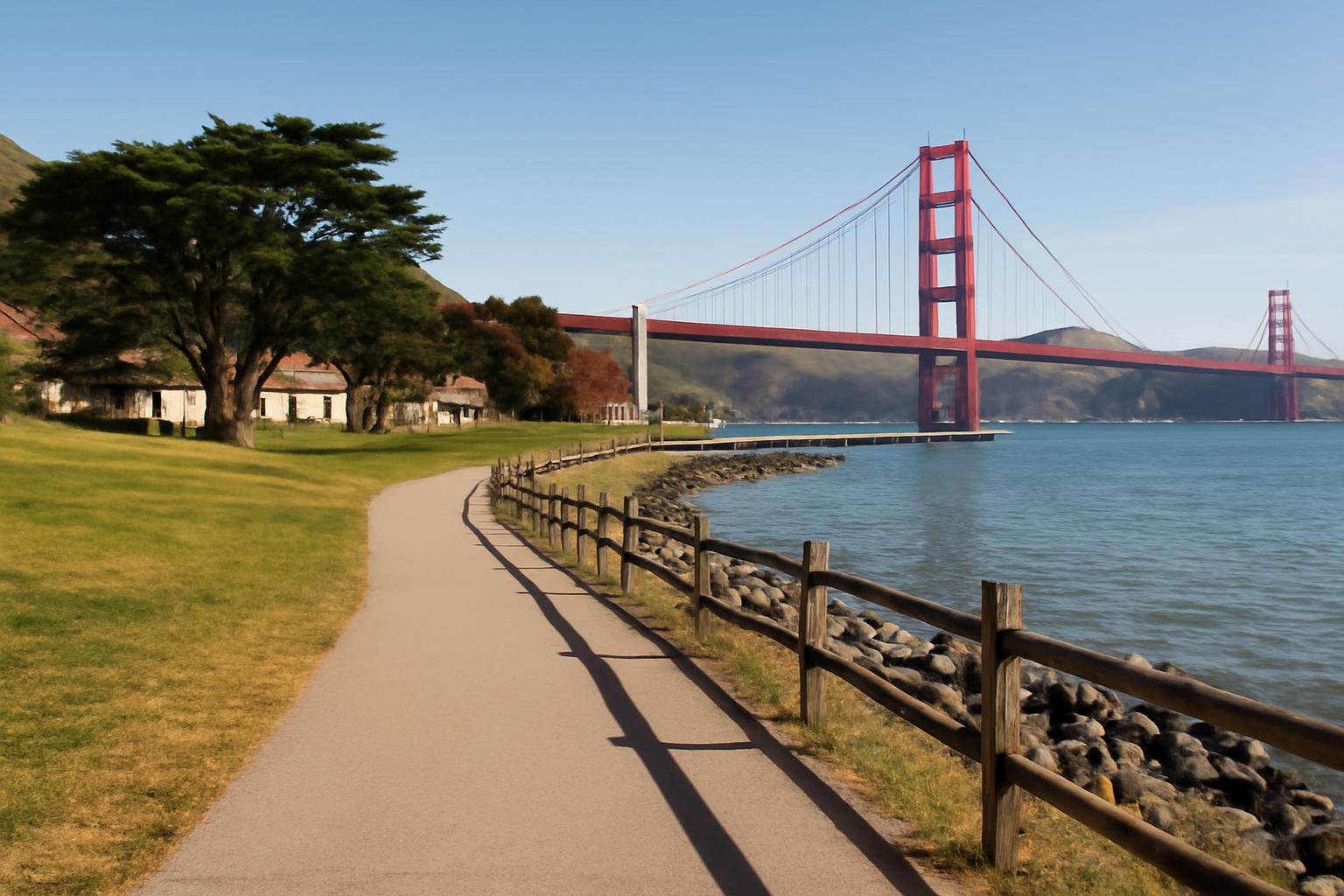
The easiest self-guided Golden Gate waterfront walk is a one-direction route that keeps the water beside you and avoids turning back uphill for no reason. That gives you the views, the movement, and the bridge time without turning the outing into a cardio test.
The best version is simple:
- start near a flat waterfront edge
- walk toward the bridge
- keep the return plan separate from the walking route
- use transit or a different finish point if you do not want to retrace the same stretch
That structure keeps the walk calm and readable.
It also makes the route easier to shorten or extend. If the day is going well, you can keep going. If the wind picks up or the pace feels slower than expected, you can stop without feeling like you failed to finish a loop.
Why one direction works better
A waterfront walk is easiest to enjoy when you are not also managing a loop of hidden climbs. The landscape around the Golden Gate area can look flat in one direction and surprisingly tiring in another. A straight route lets you focus on the view instead of on whether you are accidentally adding a hill.
If you want the walk to feel relaxed, do not turn every scenic stop into a detour. Pick the pieces that matter and leave the rest for another day.
That is the right mindset for this part of the city. The waterfront rewards focus. A clear line, a few pauses, and one clean destination usually make for a better memory than trying to squeeze every possible angle into one outing.
How to pace the route
The right pacing is short enough to stay fresh and long enough to feel like an outing.
- Stop for photos when the view opens up.
- Pause when the wind makes the walk less comfortable.
- Keep the route flexible enough to skip a side street if it does not add much.
This is one of those days where a slower pace is not a problem. It is the point.
What to bring
The waterfront can feel cooler than the rest of the city, so bring a layer even if the forecast looks fine. Comfortable shoes matter more than they do on a short neighborhood stroll because the walk is pleasant enough that you may want to keep going.
Also bring water and keep your bag light. A scenic walk gets worse fast if you are carrying more than you need.
If you are planning this as part of a bigger day, think about what comes before and after the walk. A light meal or a transit connection on one end makes the whole outing feel better than trying to solve food, transit, and scenery all at once.
Where this walk fits in the day
This route works well as the anchor for a half day. Pair it with:
- a neighborhood lunch before the walk
- a café stop after the walk
- a second, flatter indoor stop if the weather turns
That combination gives you a full day without forcing the waterfront to carry all of it.
Common mistakes
The biggest mistake is treating the walk like a loop you must complete at any cost.
The second is adding too many side objectives. A waterfront walk is already enough of a plan.
The third is ignoring wind and temperature because the city felt mild earlier. The water has its own rules.
The fourth is assuming a straight route means a boring route. On this stretch, the point is to keep the waterfront in view and let the day feel unforced. Simple is enough here.
The best version of the walk usually feels obvious after the fact. That is a good sign. If you finish and think the route was easy to understand, the day probably worked the way it should.
That is the whole goal here: a clear route, a few strong views, and enough space in the day to enjoy the walk instead of managing it.
If you want the route to feel even easier, start with the expectation that you are choosing one good stretch, not solving the whole waterfront in one go.
Before starting, choose an exit rule: a fixed turnaround time, a landmark where you will reassess, or the first convenient transit stop after the bridge view. That decision prevents the common late-day problem of realizing that the scenic outbound walk also created a long, cold return.
Check the wind by the water rather than judging from an inland street. If conditions feel rough, keep the flatter waterfront portion and skip any exposed extension. You still get a coherent walk, and the route remains easy to resume on another day.
If you want the route to fit the rest of your trip, start with how to choose a San Francisco neighborhood base. If hills matter more than the view, use how to plan a hill-smart San Francisco day as the framework instead.