
Overview
The three best gardens in San Francisco are the San Francisco Botanical Garden, the Conservatory of Flowers, and the Japanese Tea Garden, all inside Golden Gate Park. Choose the Botanical Garden for plant variety and space, the Conservatory for indoor tropical displays on a foggy day, and the Tea Garden for a compact, traditional Japanese landscape.
These three sit within walking distance of each other, which is why they dominate nearly every credible list of San Francisco gardens. Garden Design’s self-guided day trip covers exactly these three, and Yelp reviewers describe them as the three main gardens of Golden Gate Park. That clustering also means you can compare them honestly and, if you want, visit all three in one outing without a car.
One boundary matters before you plan anything: several well-known “San Francisco” garden recommendations are not in San Francisco. Filoli, the historic estate garden praised by the San Francisco Peninsula tourism board, is in Woodside, and Hakone Garden, a frequent community favorite on Quora, is in Saratoga. Both are separate Bay Area day trips, not city outings, so this guide ranks only gardens inside the city.
The best gardens in San Francisco
The strongest evidence-backed shortlist is the Golden Gate Park trio: the Botanical Garden, the Conservatory of Flowers, and the Japanese Tea Garden. Each is a genuine curated garden with documented collections, official operating information, and a distinct experience, which is the standard used here. Other sites that appear on broader lists, such as Yerba Buena Gardens, the Queen Wilhelmina Tulip Garden, or landscaped stairways like the Hidden Garden Steps (all named in Tripadvisor’s San Francisco gardens ranking), are worth a detour if you are nearby, but the supplied comparative evidence on their hours, access, and collections is too thin to rank them alongside the main three.
The matrix below compares the three on the factors that actually decide the choice. The “best for” column is editorial synthesis based on the documented differences; the operational facts come from the official Gardens of Golden Gate Park pages.
| Garden | Type | Best for | Scale | Weather exposure | Time profile | Access caveat |
|---|---|---|---|---|---|---|
| San Francisco Botanical Garden | Open-air botanical collection | Plant variety, families, unhurried walking | 55 acres, 8,000+ kinds of plants (gggp.org) | Fully outdoors | Longest visit; hard to see everything in a few hours | Most paths wheelchair accessible, marked with ISA symbols (gggp.org) |
| Conservatory of Flowers | Historic indoor glasshouse | Tropical plants, foggy or damp days | Compact galleries under one roof | Mostly indoors | Shorter, gallery-by-gallery visit | Wheelchair accessible; closed Wednesdays (gggp.org) |
| Japanese Tea Garden | Traditional Japanese landscape | A compact, contemplative visit; historic landmarks | Small, dense site | Fully outdoors | About an hour per visitor and tour reports | Most of the historic landscape is not wheelchair accessible (gggp.org) |
If you cannot decide, the practical answer is that scale and weather do most of the work. Want room to wander and the widest plant range, pick the Botanical Garden. Want warmth and color when the fog sits over the park, pick the Conservatory. Want a short, focused visit built around landmarks rather than acreage, pick the Tea Garden.
1. San Francisco Botanical Garden: best overall for variety and room to explore
The Botanical Garden is the best single choice for most visitors because nothing else in the city matches its range. The official Gardens of Golden Gate Park page describes 55 acres of landscaped gardens and open spaces with more than 8,000 different kinds of plants from around the world. That is an order of magnitude more ground than either of the other two gardens, and it changes how the visit feels: you walk between distinct planted areas rather than through one composed scene.
Scale is also the garden’s main planning constraint. Garden Design quotes local landscape designer Kelly Kilpatrick saying “You can totally get lost!” and admitting it is hard to see it all in just a few hours, and a Bay Area garden roundup at A Charming Escape notes that one can easily spend a day here. Treat those as visitor estimates rather than official durations, but the direction is consistent: budget more time here than at the other two gardens, and do not expect completeness on a first visit.
Two practical points strengthen the case. First, the official admissions page lists free entry daily from 7:30 to 9am, which no other garden on this list offers every day. Second, the garden is the strongest family option of the three: the official page highlights a Children’s Garden that invites kids to dig, water, pick, build, and explore at no extra cost. If you have flexible time, mixed ages in your group, or simply want the most garden per visit, start here.
2. Conservatory of Flowers: best for tropical plants and foggy weather
The Conservatory of Flowers is the pick when you want plants the outdoor gardens cannot grow, or when the weather argues against an open-air walk. The official gggp.org page describes it as the oldest public wood-and-glass conservatory in North America, housing rare and tropical collections across themed galleries: Aquatic Plants with giant water lilies and carnivorous pitcher plants, Highland Tropics mimicking misty cloud forests (one of only a handful of such displays in the United States, per the same page), Lowland Tropics with century-old specimens including a towering Imperial Philodendron, and a rotating Potted Plants gallery. Garden Design adds that the Victorian-era building holds over 1,700 species of aquatic and tropical plants, including a well-known orchid collection.
The weather logic is simple and directly supported: Garden Design’s local expert Kelly Kilpatrick calls it “a good place to go on a foggy day.” The Botanical Garden and Tea Garden are fully exposed, so of these three gardens, the Conservatory’s indoor galleries are the most sheltered option on a gray or drizzly day. That makes it a useful complement to the open-air gardens rather than a substitute.
Check status before you go. The official page currently notes the West Gallery is closed for renovation, the building closes every Wednesday for maintenance, and the admissions page lists a 2026 annual maintenance closure from January 21 to February 4, 2026. A foggy-day plan fails if you arrive on the one day of the week the doors are shut.
3. Japanese Tea Garden: best for a compact, contemplative visit
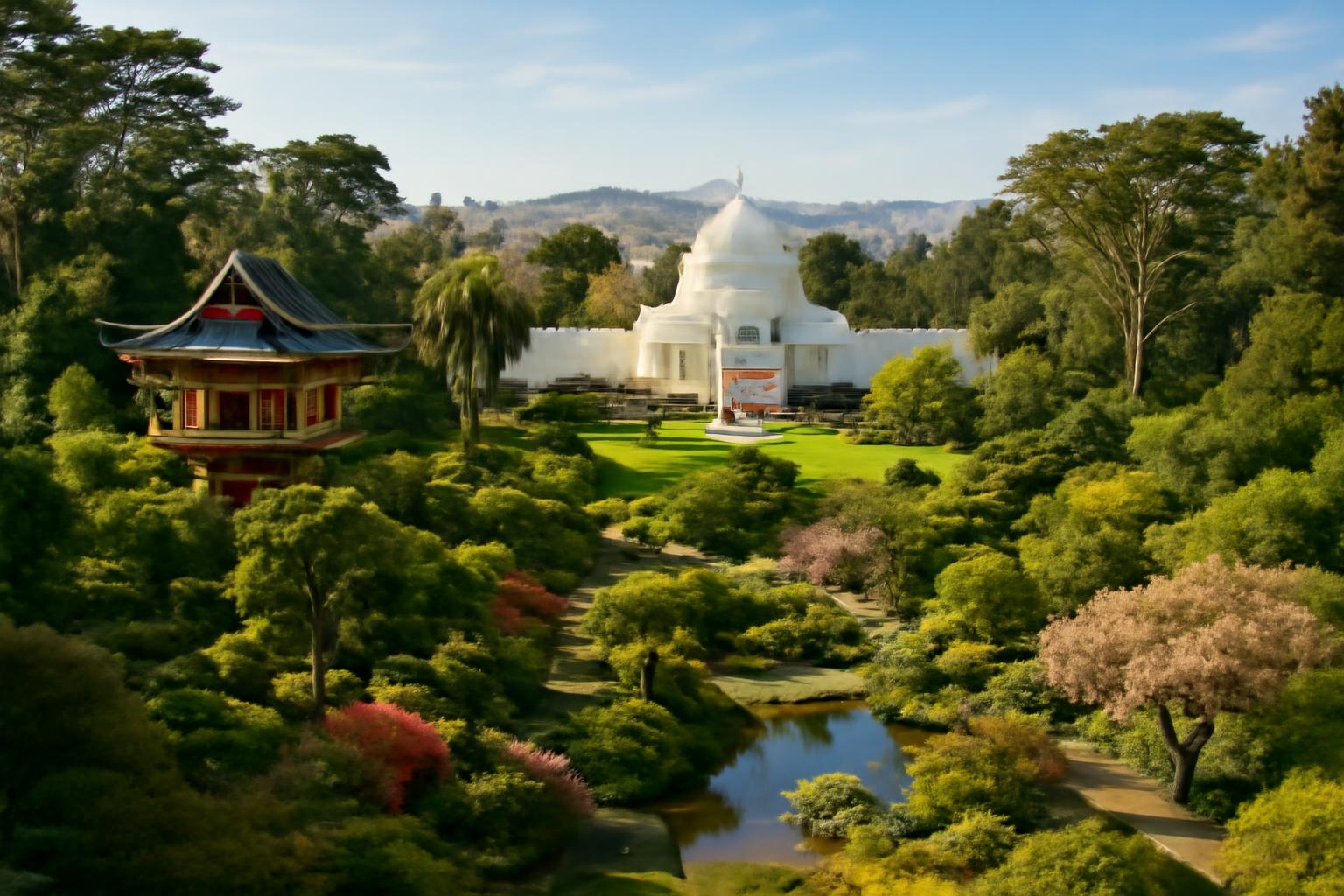
The Japanese Tea Garden is the right choice when you want depth over acreage. The official gggp.org page describes it as the oldest operating public Japanese garden in North America, and its landmarks carry real history: a Buddha cast in Japan in 1790, a pagoda originally built for the 1915 Panama-Pacific International Exposition, and a dry landscape garden designed by Nagao Sakurai in 1953 to represent hills, mountains, and running water. Garden Design highlights the arched drum bridge, koi ponds, and the karesansui dry garden as the draws most visitors remember.
The Tea House anchors the visit. Per the official page, it sits at the site of the original teahouse built for the 1894 Mid-Winter Exposition, overlooking the south-facing pond, and serves tea and Japanese refreshments at a farmhouse-style family table. If you want a garden visit with a built-in place to sit and reset, this is the only one of the three that offers it as a designed feature.
Plan for a short visit. San Francisco City Guides runs a 60-minute walking tour, per gggp.org, and Tripadvisor reviewers report the whole garden takes about an hour, with one noting they finished in under an hour. Opinions on value vary in visitor reviews, and reported prices conflict across secondary sources, so treat the compact size as a known tradeoff rather than a verdict: you pay for a dense, historic landscape, not for walking distance. Two access facts matter here and are covered in detail below: entry requires a reserved time slot, and most of the historic landscape is not wheelchair accessible, both per official gggp.org pages.
Admission, hours, and ticket planning
Verify everything on the official Gardens of Golden Gate Park admissions and hours page before you commit to a date, because hours shift seasonally, closures recur, and secondary sources circulate conflicting prices. This guide deliberately does not quote current general admission prices, full San Francisco resident eligibility rules, or membership pass terms, because the supplied official excerpts do not confirm them; visitor reports on Yelp and Tripadvisor say SF residents enter the Botanical Garden at no cost, but confirm the current rule and required proof on the official site.
What the official admissions page does confirm, as of its 2026 posting:
- San Francisco Botanical Garden: open daily at 7:30am, with seasonal last entry (6pm in spring and summer, as early as 4pm in late fall and winter; the garden closes one hour after last entry). Free times: daily 7:30 to 9am, the second Tuesday of every month, and Thanksgiving, Christmas, and New Year’s Day.
- Conservatory of Flowers: open six days a week, 10am to 4:30pm with last entry at 4pm, closed Wednesdays for maintenance. Free day: the first Tuesday of the month. The 2026 annual maintenance closure runs January 21 to February 4.
- Japanese Tea Garden: open daily at 9am, with last entry 30 minutes before closing; last entry is 5:30pm March through October and 4:30pm November through February. Free hour: Monday, Wednesday, and Friday, 9 to 10am.
Two further rules affect planning. The Japanese Tea Garden’s official page states that all visitors are required to reserve a time slot in advance through timed entry, so this is not a garden you can reliably walk up to on a busy day. And the admissions page states that all visitors receiving food assistance (SNAP benefits) get free general admission by presenting a valid EBT card at entry, with full-priced admission still applying to special exhibitions and events.
One free extra is worth knowing: the admissions page describes Photosynthesis, a roughly 30-minute light show on the Conservatory’s exterior beginning 30 minutes after sunset every night, free to the public. It requires no ticket and works as a low-cost evening addition to any park visit.
When to visit for seasonal blooms
Spring is the strongest season for the Japanese Tea Garden, and it is the only garden of the three with official bloom windows in the supplied evidence. The garden’s official page states that cherry blossom trees bloom throughout the garden in March and April, azaleas bloom in March and April, and wisteria blooms in April and May. If cherry blossoms are the point of your trip, aim for that March-to-April window and accept some risk: bloom timing shifts with each year’s weather, and no source guarantees peak dates. A Tripadvisor reviewer’s suggestion of early March for cherry blossoms falls at the front edge of the official window, so treat it as one visitor’s experience, not a schedule.
For the Botanical Garden, the best-supported seasonal report is secondary: a Yelp reviewer notes that magnolias bloom from mid-January through March and calls them a highlight of the garden. That aligns with a useful planning insight, since a mid-winter magnolia window gives the Botanical Garden a strong off-season argument when the Tea Garden’s headline blooms are months away.
The Conservatory of Flowers is the hedge against all of this. Its tropical galleries are indoors and curated year-round, so a missed bloom window outside costs you less if the Conservatory is on your route. No complete official bloom calendars for the Botanical Garden or Conservatory were available in the supplied evidence, so for anything beyond the windows above, check the official gggp.org pages close to your date. Note that the Botanical Garden’s daily 7:30 to 9am free window, per the official admissions page, happens to put you in the garden in morning light during bloom season, though no evidence here supports claims about crowd levels at that hour.
Plan by time, accessibility, and family needs
The three gardens are close together but serve very different practical constraints, so filter by your real limits before choosing. Available time is the biggest variable, since the Botanical Garden rewards hours that the Tea Garden does not require. Mobility needs are the second, because official accessibility guidance differs sharply across the three sites. Family logistics are the third. The two subsections below work through each filter using official details where they exist and clearly labeled visitor reports where they do not.
How much time to allow
Budget roughly an hour for the Japanese Tea Garden and materially more for the Botanical Garden; the Conservatory sits in between but lacks a reliable published estimate. The one-hour Tea Garden figure has the strongest support: San Francisco City Guides’ official walking tour runs 60 minutes per gggp.org, and Tripadvisor reviewers independently report about an hour to enjoy the Tea House and gardens, with one finishing in under an hour. A compact site with a fixed loop of landmarks simply does not absorb a half day.
The Botanical Garden is the opposite case. Garden Design’s local expert says it is hard to see all of it in just a few hours, and A Charming Escape’s writer reports one can easily spend a day there. Neither is an official benchmark, but both point the same direction: if you have 90 minutes total, the Botanical Garden will feel cut short, while the Tea Garden will feel complete. A useful rule from the 55-acre official scale is to pick two or three sections of the Botanical Garden in advance rather than attempting coverage.
No official or visitor-reported self-guided duration for the Conservatory of Flowers appears in the supplied evidence. Its galleries are compact and indoors, and the official hours run 10am to 4:30pm with last entry at 4pm, which caps how late you can slot it into a day. Plan it as the shortest stop of the three and adjust on site. If your whole outing has a hard stop, do the Tea Garden’s timed-entry reservation first, since that fixed slot anchors the rest of your schedule.
Accessibility and family fit
For wheelchair users, the official guidance is unambiguous: the Conservatory and Botanical Garden work, and the Japanese Tea Garden mostly does not. The Gardens of Golden Gate Park admissions page states each garden’s status directly:
- Conservatory of Flowers: wheelchair accessible for both motorized and non-motorized chairs, with two non-motorized loaner wheelchairs at the ticket booth on a first-come, first-served basis.
- San Francisco Botanical Garden: most pathways are wheelchair accessible, accessible routes are marked on wayfinding signage with the ISA symbol, and complimentary wheelchairs are available at either entrance, first come, first served.
- Japanese Tea Garden: most of the historic landscape is not wheelchair accessible, with limited accessibility to the Tea House and restrooms.
Restroom details matter for longer visits. Restroom details matter for longer visits, but the supplied official information does not specify restroom locations, so consult the current official accessibility map for restroom information. Check the official visitor map for accessible paths before you choose an entrance.
For families, the Botanical Garden is the best-supported choice. Its official page promotes the Children’s Garden, where kids can dig, water, pick, build, and explore hands-on for free. Tripadvisor visitor reports add that the paths are mostly paved and stroller friendly, but treat that as informal impression rather than official stroller guidance, which the supplied evidence does not include. Official stroller routes, accessible entrance specifics for the Tea Garden, and family facilities at the Conservatory are all details to confirm directly with the gardens at (415) 661-1316 x412 or info@gggp.org, the contact listed on the official admissions page.
A walkable Golden Gate Park garden itinerary
You can visit all three gardens in one car-free outing, and the supported order is Conservatory first, Botanical Garden second, Japanese Tea Garden last. Garden Design’s local landscape designer Kelly Kilpatrick recommends exactly this sequence: leave the car behind, start at the Conservatory of Flowers, take what she describes as a short, flat walk to the San Francisco Botanical Garden, and finish at the Japanese Tea Garden. All three sit within easy walking distance of one another inside Golden Gate Park, per the same source, so this is one of the rare San Francisco itineraries where elevation is not the constraint.
The official schedule details reshape that order depending on your budget and start time. Three timing levers, all from the official gggp.org admissions page, are worth building around:
- The Botanical Garden opens at 7:30am and is free daily until 9am, so an early start there costs nothing.
- The Tea Garden’s free hour runs 9 to 10am on Monday, Wednesday, and Friday, and all visitors need a reserved time slot regardless of price.
- The Conservatory does not open until 10am and is closed Wednesdays, so it cannot start a Wednesday itinerary at all.
Put together, a budget-minded Monday or Friday version inverts Kilpatrick’s order: Botanical Garden in the free 7:30 to 9am window, Tea Garden in its 9 to 10am free hour with a reserved slot, then the Conservatory after its 10am opening. On days when the Conservatory is open (any day except Wednesday), the classic Conservatory-first sequence works well, with the Botanical Garden taking the largest share of your time (its scale supports hours, per Garden Design) and the roughly one-hour Tea Garden as the calm closing stop before tea at the Tea House.
Two honest limits on this plan. First, the supplied evidence supports the walkable sequence but not exact distances, walking times, Muni routes, or parking guidance, so check current transit options and park road closures before you go; and verify current park transportation options directly with official sources if walking becomes tiring. Second, last-entry times are earlier than closing times at every garden and change seasonally, so on a fall or winter day, sequence your afternoon around the Tea Garden’s 4:30pm last entry and the Conservatory’s 4pm last entry rather than assuming a full evening. Reserve the Tea Garden slot first, and let everything else flex around it.