
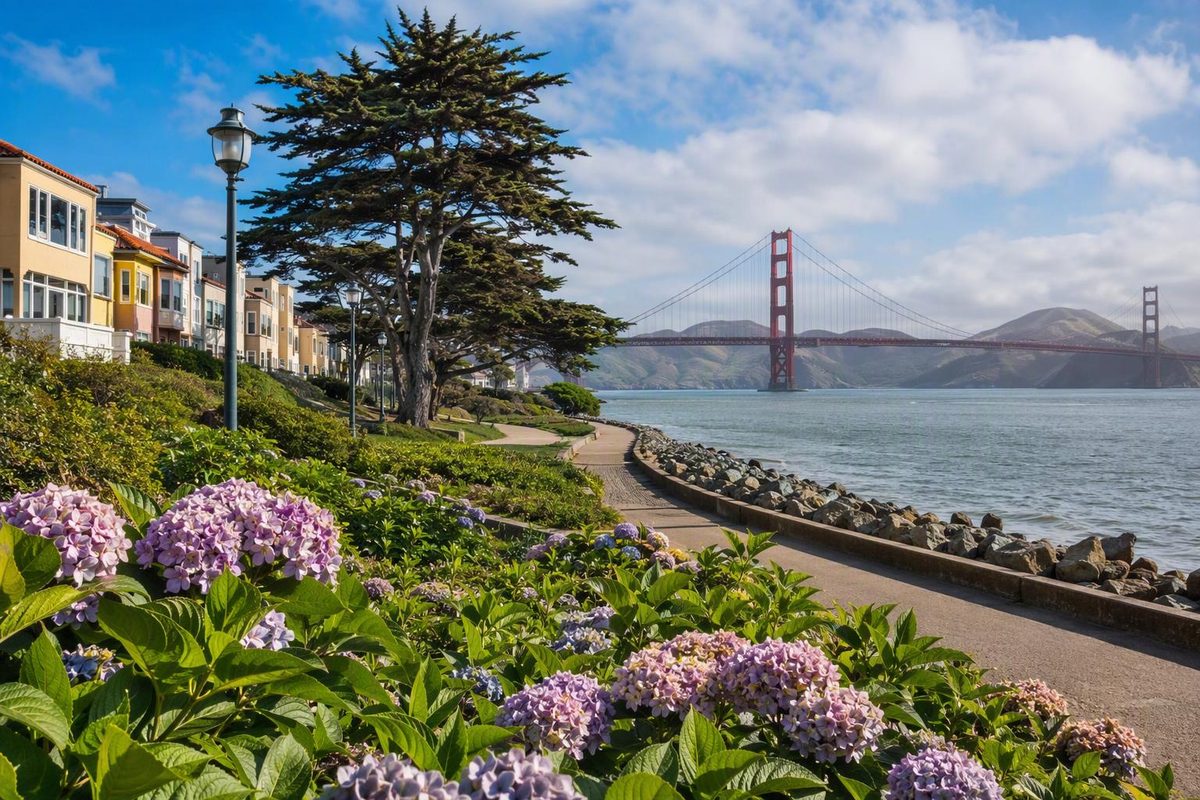
San Francisco’s best cheap outings include the Golden Gate waterfront, public gardens, neighborhood walks and small museums that charge no admission. The most efficient approach is to group sights by area: each plan below keeps admission at $0 when followed at the stated times, leaving only transit, food, donations and optional arcade games to pay for.
Choose your main sight, hill tolerance and expected weather; the planner will identify the cleanest route.
Find the Best $0 Route
The default is the mostly flat waterfront day. Change any selection for a route-specific adjustment.
Day 1: Embarcadero to Fisherman’s Wharf
Follow the mostly flat waterfront route to Pier 45, with an optional extension through Aquatic Park to Ghirardelli Square.
Adjustment: Use transit to reach Pier 45 if you want to reduce the walk further.
Waterfront
$0 admission. About 2.5 mostly flat miles to Ghirardelli Square. Musée Mécanique games cost extra.
Presidio and Fort Point
$0 admission. About 2.5 miles downhill or level, followed by a climb or waterfront backtrack.
Golden Gate Park
$0 in listed windows. Distance is scalable; choose one extension after the garden.
Source: official venue, National Park Service, Presidio and Gardens of Golden Gate Park information cited in the guide. Hours and free-entry rules can change.
Day 1: Walk From the Embarcadero to Fisherman’s Wharf
Best for: A first day, low hill tolerance and uncertain weather
Walking effort: About 2.5 mostly flat miles if you continue to Ghirardelli Square
Start at the Ferry Building and follow the Embarcadero north. Browsing the building and watching ferries does not require a ticket. Continue past the cruise terminal and Exploratorium toward Pier 39.
At Pier 39, walk to K-Dock to look for the sea lions. Because they are wildlife, their presence and numbers are not guaranteed. This is a quick stop rather than something around which to schedule the whole day.
Continue west to Pier 45 for Musée Mécanique, a collection of more than 300 working, coin-operated mechanical instruments and arcade machines. Admission is free; bring a small cash allowance only if you want to operate the machines.
From Pier 45, either finish the route or continue through Aquatic Park to Ghirardelli Square. The extension adds waterfront scenery without a major climb. The broader Fisherman’s Wharf walking route is useful if you want to reverse the direction or include one paid attraction.
This is the easiest of the three days for minimizing hills. The principal tradeoff is exposure: much of the walk runs along open water, where wind can make a comfortable temperature feel colder.
Shorten the Route in Rain or Hard Wind
Take transit closer to Pier 45 instead of walking the full Embarcadero. Spend more time inside Musée Mécanique, then visit the sea lions or Aquatic Park during a break in the weather.
If conditions remain unpleasant, stop at Pier 45 rather than continuing to Ghirardelli Square. The final extension is scenic, not necessary to make the route worthwhile.
Day 2: Link Presidio Tunnel Tops, Crissy Field and Fort Point
Best for: Golden Gate Bridge views, picnics and families
Walking effort: About 2.5 miles from Tunnel Tops to Fort Point, mostly downhill or level; leaving requires a climb or some backtracking
Take Muni to Presidio Tunnel Tops rather than climbing into the Presidio on foot. The park lists the 43 Masonic to Presidio Transit Center and the 30 Stockton to the Sports Basement area as direct options.
Tunnel Tops is open daily, requires no reservation and is free to everyone. It has lawns, picnic tables, bridge views, restrooms and the free Outpost nature playground.
Walk downhill toward Crissy Field, then turn west and follow the waterfront to Fort Point, directly beneath the Golden Gate Bridge. The route is geographically simple and keeps the bridge in view, but the exposed shoreline can be cold or windy.
Fort Point charges no entrance fee. Its interior is open Thursday through Monday, 10 a.m.–5 p.m.; roof access closes at 4:30 p.m., while the exterior is accessible daily. Verify the current NPS hours before setting out. The Fort Point visiting guide covers exhibits, accessibility details and transport choices.
The awkward part is leaving. No bus stops at the fort. Route 28 serves the Golden Gate Bridge plaza uphill, while the lower-effort alternative is to retrace the level waterfront toward Crissy Field and the Route 30 stop near Sports Basement. The NPS directions page confirms that Route 28 serves the bridge plaza rather than Fort Point itself.
Choose the return along Crissy Field if avoiding a final climb matters more than repeating part of the walk. Pack lunch as well: buying from the Presidio’s rotating food vendors can erase much of the day’s savings.
Use Fort Point as the Weather Shelter
In fog or light rain, Fort Point can be the sheltered anchor of the route. It is closed Tuesday and Wednesday, however, so do not rely on the interior on those days. Shorten the waterfront walk or substitute the Cable Car Museum if the fort is closed and conditions are poor.
Day 3: Use a Free Garden Window in Golden Gate Park
Best for: Gardens, a long park walk and an optional Ocean Beach finish
Walking effort: Scalable, although the park is long even when its terrain looks easy
Time the morning around one of the official free-entry periods:
- San Francisco Botanical Garden: Free 7:30–9 a.m. daily, plus the second Tuesday of each month.
- Japanese Tea Garden: Free 9–10 a.m. Monday, Wednesday and Friday.
- Conservatory of Flowers: Free on the first Tuesday of each month.
These windows are open to everyone, not only San Francisco residents. The Gardens of Golden Gate Park ticket page lists the current rules. Outside those periods, free garden admission generally depends on residency or another qualifying category.
After visiting one garden, walk JFK Promenade and choose only one extension: the bison paddock, the windmills or Ocean Beach. Trying to cover every park landmark creates a deceptively long day.
For a shorter outing, remain around the Music Concourse, JFK Promenade and Blue Heron Lake. The park comparison guide can help you decide whether Golden Gate Park or a smaller city park better fits your available time.
Match the Wet-Weather Plan to the Calendar
Use a free garden period only if conditions are comfortable enough for the walk. The Conservatory of Flowers is the weather-protected choice when its first-Tuesday free day matches your schedule. Otherwise, shorten the park route rather than walking west to the bison paddock, windmills or Ocean Beach.
The Cable Car Museum Is the Best Free Mechanical Stop
The Cable Car Museum offers a way to understand the cable-car system without paying for a ride. It occupies the Washington–Mason powerhouse and includes historic cars and working machinery.
Admission is free. Hours are Tuesday–Thursday 10 a.m.–4 p.m. and Friday–Sunday 10 a.m.–5 p.m. The museum closes Monday and on New Year’s Day, Thanksgiving and Christmas.
The building is on Nob Hill. Map distance understates the effort from Union Square or Chinatown, so use a regular Muni bus to get close if steep grades are a concern. It works particularly well as a bad-weather substitute for part of Day 1 or for Fort Point when that building is closed.
The Randall Museum Is a Free Family Alternative
The Randall Museum has science, nature and live-animal exhibits. It is open Tuesday–Saturday, 10 a.m.–5 p.m., and general admission is free.
The final approach is the catch. The museum describes the direct path from Castro Station as short but very steep. Its suggested lower-grade alternative follows 14th Street and Roosevelt Way for about one-third of a mile. Take that route if saving energy matters more than saving a few minutes.
The museum is a practical indoor alternative, but it does not slot naturally into the waterfront or Golden Gate Park days. Treat it as the center of a separate Castro-area outing rather than crossing the city to add it late in another itinerary.
City Guides Walks Work Best When They Match Your Area
Volunteer-led San Francisco City Guides walks cover architecture, history and neighborhoods. Tours last about 90–120 minutes and are free, although the nonprofit suggests a $20 donation.
Walk-ups are welcome, but a few tours require advance registration; check the specific walk before going. Tours normally operate rain or shine, subject to last-minute cancellation.
Choose a walk near the rest of your plans rather than selecting solely by theme. A North Beach or Chinatown walk can fit the waterfront day, while a Golden Gate Park walk belongs with Day 3. That avoids paying for extra transit and losing time to a cross-city transfer.
Mission Murals Can End at Dolores Park—or Stay Flat
Walk Balmy Alley and Clarion Alley, then continue toward Dolores Park if you still want a viewpoint. The murals and park cost nothing, but the route gains more elevation than the waterfront day.
Start with the murals on the flatter Mission streets and make the hill optional. If the climb toward Dolores Park no longer appeals, remain around Valencia and 24th streets rather than forcing the ascent for a view.
This area works best as its own half-day. Combining it with the Presidio, Fort Point or western Golden Gate Park would undermine the geographic logic that keeps these plans cheap and manageable.
The $5.70 Muni Day Pass Covers Busy Transit Days
As of September 29, 2026, the Muni-only Day Pass costs $5.70 and covers unlimited Muni buses, trains and historic streetcars through 11:59 p.m. It does not include cable cars.
SFMTA sells the pass through Clipper, MuniMobile, vehicle fareboxes and Muni Metro ticket machines. Check the current Day Pass price and terms before travel.
The pass is most useful when a day requires several Muni rides, such as reaching the Presidio and returning from Crissy Field. If you expect to take only one ride, compare the current single fare before purchasing a pass.
Do not treat a cable car as ordinary budget transport. Because the Muni-only Day Pass excludes cable cars, use one as a deliberately chosen paid attraction rather than the default connection between free sights.