
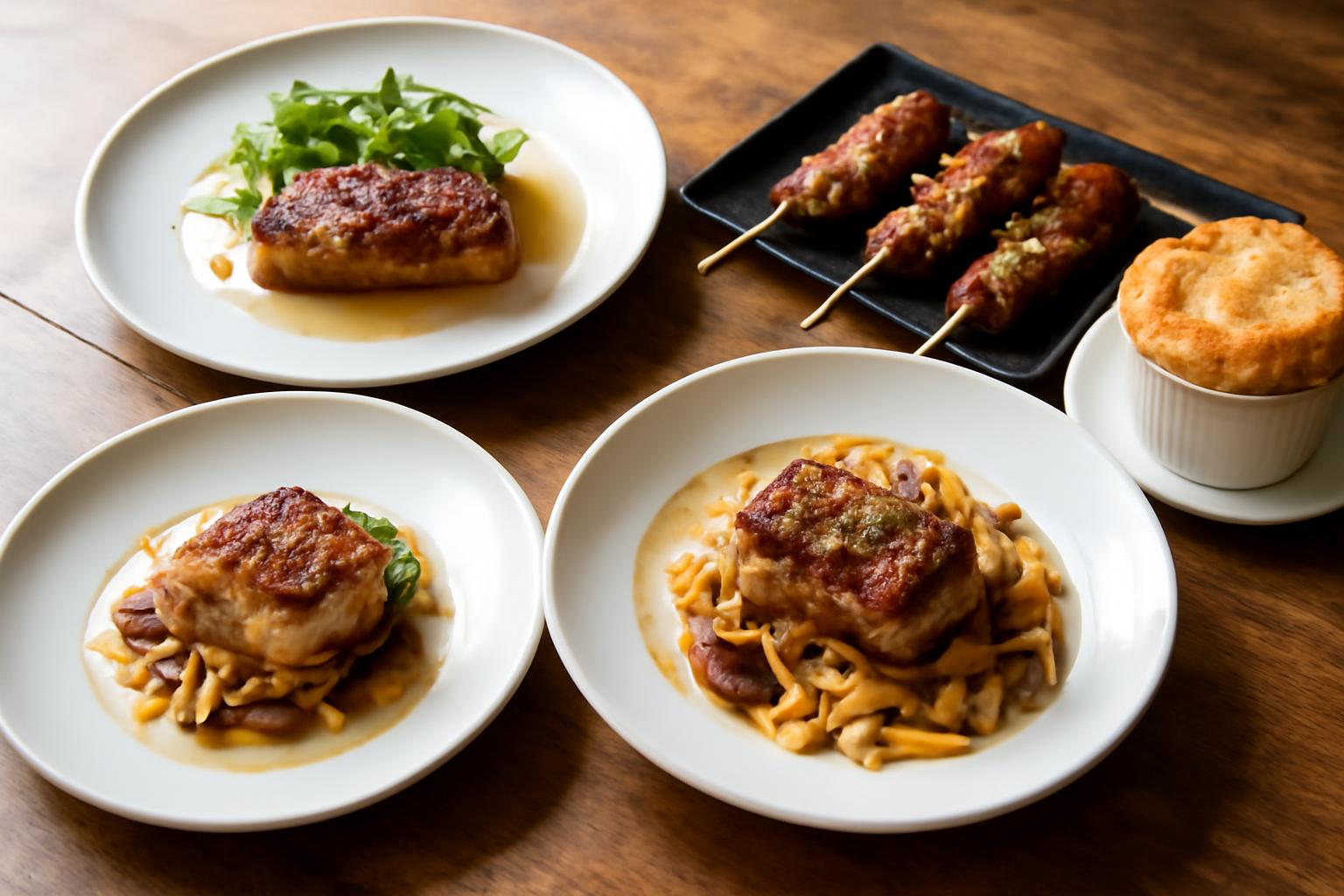
Overview
The strongest cross-source picks in San Francisco right now are Zuni Cafe for a city-defining meal, Rintaro for izakaya cooking, Lazy Bear and Quince for tasting-menu occasions, La Taqueria for a Mission classic, and Lunette for a newer waterfront standout. The right choice depends on your occasion, budget posture, and how hard a table you are willing to chase.
This guide stays within San Francisco proper, so Oakland, Berkeley, and wine country do not appear. It also treats the question the way the strongest sources treat it: not as a hunt for one universally best restaurant, but as a matching problem. Eater SF’s 38-restaurant map, the Michelin Guide’s San Francisco listings, chef recommendations published by the James Beard Foundation, and itinerary guides like Thrillist all recommend different restaurants for different jobs, from a counter-service burrito to a multi-course splurge.
What follows is a shortlist organized by restaurant type, a decision matrix that compares picks by occasion and budget posture, and practical guidance on booking, routing your meals by neighborhood, and verifying the details that change without notice. Where the evidence supports a specific figure, such as Zuni’s $31 to $50 entree range on OpenTable or Quince’s 22% service charge, you get the number. Where it does not, this guide tells you what to confirm directly rather than guessing.
How this shortlist works
Every restaurant here appears in at least one credible independent source, and the leading picks recur across several. Lunette, Rintaro, Zuni Cafe, and Lazy Bear each show up in two or more of the supplied sources: Eater SF’s best-restaurants map, a Condé Nast Traveler video in which a professional chef names personal favorites, a James Beard Foundation feature with chef Azalina Eusope, and mainstream booking and review platforms. That recurrence is the backbone of this shortlist.
Recurrence signals broad editorial and professional consensus. It does not make a restaurant objectively best. Each source applies its own frame: Eater SF requires restaurants to be open at least six months before Eater 38 consideration and refreshed its map in July 2026, the Michelin Guide filters by spend level and accommodation, The Infatuation maintains a separate Top 25, and a chef’s personal favorite reflects one professional palate. This guide keeps those frames visible instead of flattening them into a fake numerical ranking.
The shortlist uses three labels so you can pick the kind of experience you want rather than comparing unlike things on one scale:
Enduring institutions are restaurants tied to San Francisco’s dining identity over decades, like Zuni Cafe (open since 1979 per its OpenTable profile) and Thanh Long (serving Dungeness crab since 1971 per Eater SF). Established contemporary essentials are current restaurants with sustained critical support, such as Rintaro and Lazy Bear. Current standouts are newer places with strong cross-source momentum, where Lunette is the clearest case.
One boundary note: several source lists, including the James Beard feature, mix San Francisco with the wider Bay Area. This guide includes only restaurants within San Francisco proper, which matters if you are planning meals around transit rather than a car.
The best restaurants in San Francisco
Each profile below covers the reason the restaurant belongs on the list, the cuisine or experience, what to order where sources support it, the best-fit occasion, and any documented booking note. The through-line, as the chef in Condé Nast Traveler’s San Francisco video puts it, is that the city’s best kitchens are rooted in culinary traditions from around the world while emphasizing what California cuisine cares about: local ingredients, relationships with farmers, and freshness you can taste. Keep that frame in mind as you compare, because it explains why a taqueria and a tasting-menu room can sit on the same list without contradiction.
Enduring San Francisco institutions
Zuni Cafe is the consensus institution. Eater SF calls it “the real deal” and notes it has been written into the most important annals of San Francisco history, meaning cookbooks. A San Francisco Chronicle piece cited on Zuni’s OpenTable profile reports it is the only restaurant to appear on the Chronicle’s Top 100 list every year since 1996. The restaurant opened on February 15, 1979 at 1658 Market Street, between Franklin and Gough, and serves daily changing menus built on seasonal organic ingredients with French and Italian roots. The order is well documented: Yelp’s popular-dishes data puts the roast chicken with bread salad and the Caesar salad at the top, and OpenTable’s current menu lists the Zuni Caesar at $19. OpenTable also shows entrees in the $31 to $50 band and lists lunch Friday through Sunday plus dinner Tuesday through Sunday, details worth reconfirming before you go. Best for a visitor-essential meal or a celebratory dinner that still feels like the city.
La Taqueria covers the Mission-style Mexican side of San Francisco’s food identity. In Condé Nast Traveler’s chef video, it is named the chef’s favorite taqueria in the Mission, praised specifically for fresh ingredients, with the caveat that it is many people’s favorite and draws crowds accordingly. This is the pick when you want a fast, inexpensive, standing-in-line meal that is still one of the most defensible recommendations in the city. No reservation applies; you walk in.
Anchor Oyster Bar is the cioppino pick. Eater SF frames cioppino as one of the city’s signature culinary innovations and calls Anchor a must-try for anyone who wants to steep themselves in San Francisco’s gastronomic history. If you want one distinctly local seafood dish during a visit, this is the source-supported place to get it. It is a small room, so build slack into your plan rather than arriving with a large group and a tight schedule.
Thanh Long owns the Dungeness crab lane. Eater SF’s assessment is direct: few San Francisco restaurants treat Dungeness crab in skillful, specific presentations worth returning to year after year, and Thanh Long has defended that title since 1971. Vietnamese-rooted roast crab is the reason to go. Best for a group dinner organized around one shared centerpiece dish.
House of Prime Rib is the old-school occasion dinner, and also the city’s most notorious booking. Thrillist names it as the clearest example of a restaurant that books out weeks and even months in advance. Eater SF adds a practical note: reservations are highly recommended, especially for groups, but a party of two that strikes out can sometimes land a walk-in seat at the bar. Best for a celebratory dinner with a classic format, provided you plan the reservation before you plan anything else.
Established contemporary essentials
Rintaro is the strongest chef-endorsed pick in the corpus. In Condé Nast Traveler’s video, the featured chef calls this Mission izakaya “probably my very favorite restaurant in all of San Francisco.” Eater SF goes further on the food, describing a meal here as a Bay Area rite of passage, and names the dishes worth targeting: the udon “carbonara” with raw egg yolk, Becker Lane Berkshire pork gyoza with chicken foot jelly, and elegant sashimi. Best for a date night or a food-focused dinner where the cooking itself is the event. The Mission location also makes it easy to pair with other stops, covered in the routing section below.
Lazy Bear is the tasting-menu pick with a personality. In the James Beard Foundation’s feature, chef Azalina Eusope singles out Lazy Bear, run by chef David Barzelay with business partner Colleen Booth, as both delicious and innovative, with an ambiance she describes as dreamy and explicitly date-night worthy. Eusope, who dines out daily, pairs it with Nightbird as one of two James Beard Award-recognized fine-dining rooms with stellar tasting menus on her list. Best for a special occasion where you want inventive cooking rather than formality for its own sake. Her broader list, which also spans Mongolian and Vietnamese cooking, is a useful reminder that San Francisco’s fine dining sits inside a much wider field.
Quince is the haute cuisine pick, and the one with the most transparent operating terms. Eater SF describes it as the fine dining restaurant that advocates of haute cuisine cite as proof that not all the fancy places bore you before presenting a four-figure check. Quince also publishes unusually clear terms on its own site: reservations are released online on the first of the month for the following month (December seats open November 1), a deposit is required for the dining room and salon and is deducted from the final bill, a 22% service charge applies to all food and beverage sales, and a 6% surcharge offsets employee healthcare costs. Reservations are final and non-refundable, can be rescheduled once with at least 72 hours notice, and menu modifications require 7 days notice. Best for a planned-well-in-advance celebration where you want the full fine-dining apparatus done properly.
Abacá is the group-dinner pick. Eater SF’s best-for label describes it as a booming dining tour through the Philippines with a big group, which tells you both the cuisine and the ideal party size in one line. If you are coordinating six people with different preferences, a shared Filipino menu built for volume is an easier decision than splitting the group across a tasting-menu room.
Beit Rima is the spontaneous stop. Eater SF’s guidance is to walk by when feeling peckish, stop in if there is space, and order the mezze platter. That makes it the rare shortlist pick that rewards no planning at all, useful when the rest of your day runs long and a reservation elsewhere falls through.
Current standouts
Lunette is the clearest current standout because two independent sources converge on it. Eater SF says its well-priced, crunchy, chewy, and spicy menu is some of the best food in the city, and certainly the best at the Ferry Building and along the waterfront. In Condé Nast Traveler’s video, the featured chef credits Lunette’s Cambodian cooking, run by chef Nite Yun, with opening their eyes to a cuisine they previously knew little about.
Two things make Lunette useful on a practical shortlist. First, the “well-priced” note from Eater SF means it is one of the few standout picks where strong food does not require a splurge posture. Second, the Ferry Building location puts it on flat ground at the foot of Market Street, directly on the Embarcadero, which makes it the easiest shortlist restaurant to reach by transit and to fold into a waterfront walk.
Treat the “current standout” label honestly: it means broad recent editorial support, not proof that Lunette outranks the institutions above. Newer restaurants also change menus and hours more often than decades-old ones, so check current details on the restaurant’s own channels before building a day around it.
Choose by occasion and budget
Before you compare prices, understand that the price symbols you see across publishers do not agree with each other. Eater SF defines its symbols by entree price: one $ means entrees mostly under $15, $$ mostly under $30, $$$ mostly under $40, and $$$$ means pricier entrees or a tasting menu. The Michelin Guide uses the same symbols for different concepts, labeling $ “on a budget,” $$ “a moderate spend,” $$$ “special occasion,” and $$$$ “spare no expense,” with its San Francisco listings currently split across 11, 52, 42, and 44 restaurants respectively. The same restaurant can carry different symbols on different platforms, and none of them tell you a final bill.
They also exclude mandatory add-ons. Quince’s own site documents a 22% service charge on all food and beverage plus a 6% healthcare surcharge, which means the menu price understates the final bill by a meaningful margin before drinks. For that reason, the matrix below uses broad budget posture and documented signals only, and does not claim all-in per-person totals.
| Restaurant | Best for | Budget posture | Booking difficulty |
|---|---|---|---|
| Zuni Cafe | Visitor-essential meal, celebration | Entrees $31–$50 per OpenTable | Books up to 60 days out per OpenTable; walk-in tactics exist |
| La Taqueria | Fast casual Mission classic | Inexpensive counter service | Walk-in only; expect a line |
| Anchor Oyster Bar | Signature cioppino experience | Verify current menu directly | Small room; plan flexibility |
| Thanh Long | Group dinner around Dungeness crab | Verify current menu directly | Verify current policy directly |
| House of Prime Rib | Classic occasion dinner | Verify current menu directly | Hardest booking per Thrillist; bar walk-in possible for two per Eater SF |
| Rintaro | Date night, food-first dinner | Verify current menu directly | Popular; book ahead where possible |
| Lazy Bear | Special-occasion tasting menu | Tasting-menu splurge | Advance booking expected |
| Quince | Planned fine-dining celebration | Tasting-menu splurge plus 22% service charge and 6% surcharge per Quince | Monthly release on the 1st; deposit required; non-refundable per Quince |
| Abacá | Big-group Filipino dinner | Verify current menu directly | Verify current policy directly |
| Beit Rima | Spontaneous casual mezze | Casual | Walk-in if space allows per Eater SF |
| Lunette | Affordable standout, waterfront lunch | Well-priced per Eater SF | Verify current policy directly |
Read the table as a filter, not a verdict. If your constraint is budget, La Taqueria, Beit Rima, and Lunette give you the strongest food-per-dollar support in the sources. If your constraint is occasion, Lazy Bear and Quince are the documented celebration rooms, with Zuni and House of Prime Rib as the classic alternatives. If your constraint is booking flexibility, the walk-in picks let you decide the same day. The “verify” cells are honest gaps: the supplied sources do not document current prices or reservation policies for those restaurants, and guessing would be worse than sending you to the restaurant’s own site.
Reservations, walk-ins, and getting there
Choosing a restaurant is half the job. The other half is securing a seat and getting there without wasting an hour crossing the city. San Francisco compresses a lot of dining into a small footprint, which works in your favor if you plan around it: Thrillist notes the city measures roughly seven miles by seven miles, and between Muni, BART, and rideshares you do not need a car. The next two sections cover the booking problem first, then the routing problem, because a confirmed table should anchor the rest of your day, not the other way around.
Booking strategies for hard tables
Book the hardest table first and build everything else around it. Thrillist’s core advice holds across the shortlist: many of the city’s best fine-dining restaurants book out weeks and even months in advance, with House of Prime Rib the most notorious example, but many of the same restaurants offer walk-in bar seating when reservations fail.
The documented tactics, in rough order of reliability:
- Know the release schedule. Quince releases reservations on the first of each month for the following month, per its own site, and requires a deposit that is deducted from the final bill. Zuni takes reservations up to 60 days in advance per OpenTable, and asks groups of 5 to 12 to call directly.
- Use the bar as your fallback. Eater SF notes a party of two at House of Prime Rib can sometimes walk into a bar seat, and Thrillist confirms walk-in bar seating is a common fine-dining fallback citywide.
- Time your walk-in. One booking guide suggests arriving at Zuni at 5 pm, ordering from the 5 to 6 pm lite-bites menu at the bar, and landing first on the walk-in list for a 6 pm table. Eater SF’s version of the same idea for popular spots: join the pre-opening line, or walk in closer to closing when the crowds thin, accepting that some dishes may be sold out.
- Respect cancellation terms. Quince reservations are final and non-refundable, can be rescheduled only once with at least 72 hours notice, and charge for the originally confirmed party size even if your group shrinks.
Party size changes the math everywhere: two people have walk-in options that six people do not. And all of these policies change, so confirm the current rules on the restaurant’s own site or booking page before you rely on any tactic here.
Plan meals by neighborhood
Cluster your meals geographically and you remove most of the friction from a San Francisco dining day. The city is compact, but hills and cross-town transfers punish a plan that bounces between distant neighborhoods.
The Mission is the clearest cluster in this shortlist. La Taqueria and Rintaro are both there, per the Condé Nast Traveler chef video, which sets up a natural pairing: a counter-service taqueria lunch and an izakaya dinner without leaving the neighborhood. Lazy Bear also sits in the Mission’s orbit for a splurge night. The Mission is mostly flat and well served by BART, which makes it the easiest dining neighborhood for anyone staying near a BART line.
The Market Street corridor is the second cluster. Zuni Cafe sits at 1658 Market Street in the Hayes Valley and Civic Center area per OpenTable, directly on the city’s main transit spine, with only street parking listed. Lunette at the Ferry Building anchors the other end of Market at the waterfront, on flat ground along the Embarcadero. You can connect the two by Muni along Market without touching a hill, which makes this corridor the most efficient pairing for a visitor without a car.
Where the sources warn you off driving, listen. Eater SF specifically flags North Beach as difficult for parking, with apartment buildings and parklets absorbing spaces, and recommends public transit over circling for a spot. That advice generalizes: Thrillist’s assessment that Muni, BART, and rideshares make a car unnecessary is the right default for restaurant nights, especially anywhere near downtown, and it spares you both parking costs and a post-dinner drive.
This is deliberately not a complete neighborhood taxonomy. The supplied sources document locations for only part of the shortlist, so confirm the address of any pick before you build a route around it.
Verify dietary, accessibility, and booking details before you go
The details most likely to affect whether a restaurant works for you, meaning dietary accommodation, physical access, hours, and booking terms, are exactly the details this guide cannot fully verify for every pick. Distinguish three tiers of information before you rely on any of them.
Official restaurant statements are the strongest tier. Quince is the model: its own site instructs guests to give 7 days notice for any menu modification and publishes exact reservation, deposit, and cancellation terms. When a restaurant documents its policy this clearly, plan around it.
Editorial and platform filters are useful for narrowing, not confirming. The Michelin Guide’s San Francisco filters currently count 109 restaurants with vegetarian options, 74 with vegan options, 25 with gluten-free options, 14 with halal options, 13 with kosher options, and 83 with wheelchair access. Those are aggregate directory tags, not per-restaurant guarantees, and they say nothing about kitchen procedures like cross-contamination handling. Similarly, OpenTable lists wheelchair access and specific hours for Zuni (lunch Friday to Sunday 11 am to 4 pm, dinner Tuesday to Sunday 5 pm to 9:30 pm), but that is a third-party listing that can lag reality.
Diner reports are the weakest tier. A Yelp reviewer noting that a restaurant has a lot of gluten-free options tells you accommodation happened once for one party, not that a policy exists for you.
Before you commit to any shortlist pick, confirm directly with the restaurant:
- Current hours, meal periods, and any temporary closures, on the restaurant’s own site
- Reservation terms, release schedules, deposits, and cancellation rules
- Dietary accommodations, allergy procedures, and the notice the kitchen needs
- Step-free entry, restroom access, and seating that fits your party’s needs
A two-minute call resolves all four items, and for anything safety-relevant, such as a serious allergy, it is the only tier of verification worth trusting. Every restaurant in this guide earned its place on food and experience; whether it fits your specific visit is a question only the restaurant itself can answer on the day you go.