
Start Here: Choose Places by Area, Not by Ranking
The most useful way to choose among the many places to go in San Francisco is not to rank them from “best” to “worst.” Group them geographically, choose one anchor experience, and add only nearby stops that fit your interests, energy, budget, and the day’s conditions.
This guide covers 24 destination choices in six planning clusters. Two choices combine places that are commonly visited together: Mission–Castro and Haight–Alamo Square. Alcatraz is included in the count but treated as a major reserved outing rather than a casual waterfront add-on.
The terrain notes below are planning cautions, not accessibility ratings. Conditions can vary by entrance, path, construction, weather, and transit stop. Likewise, cost labels are intentionally broad: verify current admission, reservation, parking, ferry, and transit requirements before departure.
| Cluster | Destination choice | Main appeal | Setting and cost planning | Planning weight and terrain caution |
|---|---|---|---|---|
| Golden Gate and Presidio | Golden Gate Bridge | Landmark, viewpoint | Outdoor; check transport and toll implications | Flexible viewpoint or substantial crossing; exposed conditions possible |
| Golden Gate and Presidio | Fort Point | History, landmark | Historic site; verify current hours and access | Allow more than a photo stop if interiors are open |
| Golden Gate and Presidio | Crissy Field | Coastal walk, viewpoint | Outdoor; incidental transport or parking costs may apply | Flexible waterfront outing with easy turnaround choices |
| Golden Gate and Presidio | Presidio | History, trails, open space | Outdoor areas plus individual venues; verify details | Large area with varied routes and terrain |
| Golden Gate and Presidio | Palace of Fine Arts | Landmark, architecture | Outdoor setting; verify any venue-specific access | Usually a focused architectural stop |
| Golden Gate and Presidio | Wave Organ | Public art, viewpoint | Outdoor; verify waterfront access | Short detour; experience varies with water movement |
| Western San Francisco | Lands End | Coastal walk, viewpoint | Outdoor trail area; check current notices | Stairs, uneven ground, exposure, and elevation changes may occur |
| Western San Francisco | Sutro Baths | History, coastal scenery | Outdoor ruins; check current access | Flexible stop, often combined with Lands End |
| Western San Francisco | Ocean Beach | Coastal scenery | Outdoor beach; check weather and beach notices | Flexible stop with significant wind and exposure possible |
| Western San Francisco | Golden Gate Park | Gardens, open space, family options | Outdoor areas and individual institutions; rules vary | Large destination requiring selectivity |
| Western San Francisco | de Young Museum | Art museum | Indoor institution; verify admission and entry rules | Major anchor rather than a quick add-on |
| Western San Francisco | California Academy of Sciences | Science museum, family attraction | Indoor institution; verify admission and entry rules | Major anchor rather than a quick add-on |
| Embarcadero and northern waterfront | Ferry Building | Food stop, history | Indoor and outdoor marketplace; purchases and schedules vary | Flexible meal, browse, or starting point |
| Embarcadero and northern waterfront | Embarcadero | Waterfront walk, views, public art | Outdoor route with businesses and attractions along it | Flexible linear outing |
| Embarcadero and northern waterfront | Pier 39 | Family attractions, wildlife viewing | Visitor complex; individual purchases and activities vary | Short look or longer visit depending on interests |
| Embarcadero and northern waterfront | Fisherman’s Wharf | Food, maritime atmosphere, visitor attractions | District with individually operated venues | Flexible but potentially time-consuming |
| Embarcadero and northern waterfront | Alcatraz | History, island setting | Reserved ferry-based experience; verify official ticket details | Major fixed block |
| Chinatown, North Beach, and nearby hills | Chinatown | Neighborhood, food, history | Public neighborhood; business spending optional | Best explored selectively rather than street by street |
| Chinatown, North Beach, and nearby hills | North Beach | Neighborhood, food, books | Public neighborhood; business spending optional | Natural continuation from Chinatown |
| Chinatown, North Beach, and nearby hills | Coit Tower | Landmark, history, viewpoint | Verify current admission and operating details | Hill or stair approaches may add effort |
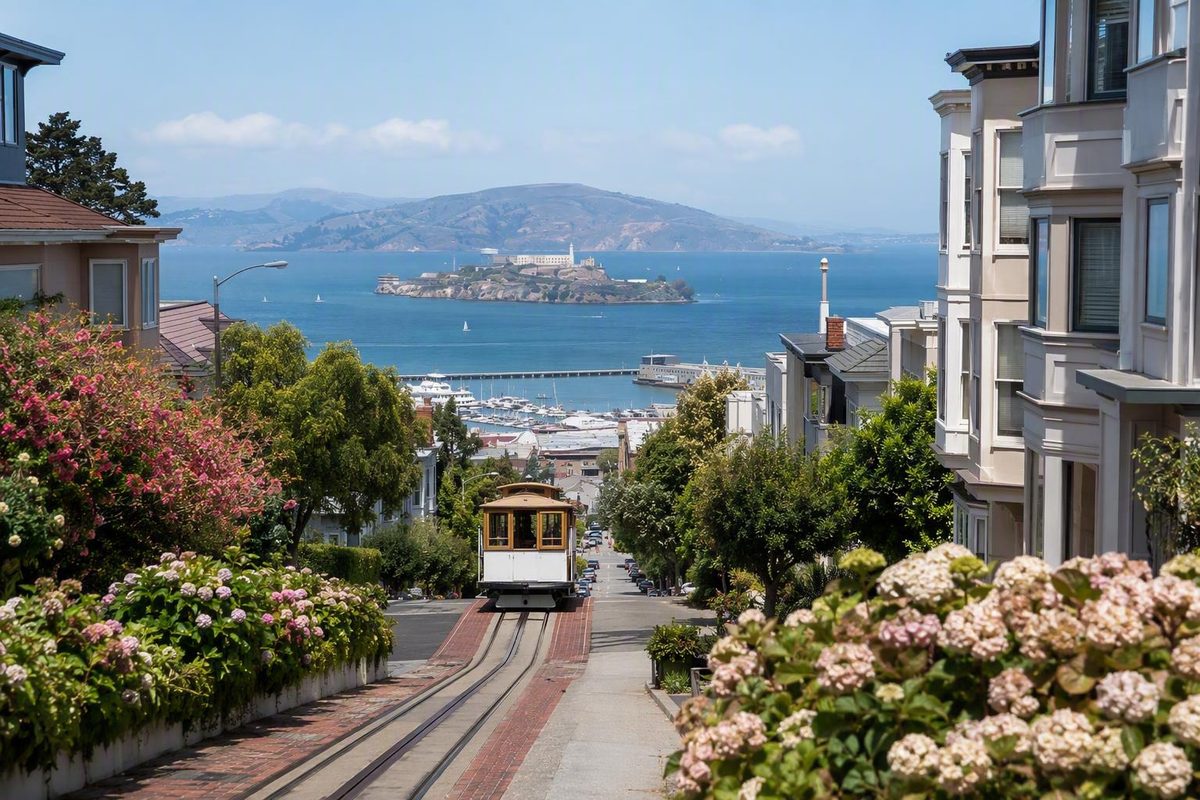
| Chinatown, North Beach, and nearby hills | Cable cars | Landmark transportation | Fare-based transit experience; verify current rules | Can reduce some walking but may involve waiting |
| Chinatown, North Beach, and nearby hills | Lombard Street | Landmark, viewpoint | Outdoor street; transport and parking may cost extra | Brief stop with steep surrounding approaches |
| Mission–Castro | Mission District and Castro | Neighborhood culture, food, parks | Public neighborhoods with optional purchases and venues | Half-day cluster; use transit selectively |
| Haight–Alamo Square | Haight-Ashbury, Alamo Square, and Painted Ladies | History, shopping, architecture | Public neighborhoods and park setting | Half-day cluster with rolling or hilly connections |
This is a selective guide, not an objective ranking. “Flexible” means you can shorten or extend the visit without missing a timed centerpiece. “Major anchor” means the destination can reasonably determine the shape of the day, even though no exact visit length is promised.
For a focused day, combine two to four adjacent places. A map can conceal elevation, indirect transit, queues, meal stops, wind, fog, and the time spent simply looking around. A ten-stop citywide checklist may be imaginable, but it leaves little room for the city itself.
Three choices deserve particular attention:
- Alcatraz or a bay cruise: choose former-prison history and a fixed island outing, or a more view-centered trip on the water.
- Fisherman’s Wharf or a quieter waterfront walk: choose concentrated visitor attractions, or more open-ended scenery along the Embarcadero or Crissy Field.
- Golden Gate Park museums or gardens and open space: choose one major indoor institution, or build a more flexible visit around parkland and a selected garden.
Before departure, check current hours, ticket rules, closures, accessibility information, transit service, and coastal notices with the relevant operator or managing agency. The city’s official visitor-information site is useful for broad planning, but it is not a substitute for live attraction and transit information.
Golden Gate and Presidio Cluster: Bridge Views, History, and a Flexible Waterfront Walk
These six places fit together geographically, but they do not provide interchangeable versions of the same bridge view. Choose two or three according to whether you want a crossing, military history, architecture, open space, public art, or an adaptable waterfront walk.
Golden Gate Bridge. Choose the bridge itself when the crossing experience matters. Walking onto it changes the perspective from a distant landmark view to an exposed encounter with the structure, traffic, and bay. You do not have to complete the crossing. Establish a turnaround point before beginning, particularly if wind, noise, visibility, or fatigue becomes uncomfortable.
Fort Point. Fort Point is the history-focused alternative beneath the bridge. The historic military site offers an underside perspective rather than the broad view available from a beach or distant overlook. If interior areas are operating, allow time for the site rather than treating it only as a photo stop. Verify current hours, entry rules, and access before going.
Crissy Field. Crissy Field works well for an open-ended waterside outing and city-side bridge views. You can stop for photographs, continue toward Fort Point, or turn back without losing the purpose of the visit. That flexibility makes it useful when a bridge crossing feels too exposed or demanding.
The Presidio. The Presidio is a broad landscape of historic structures, trails, open areas, and bridge viewpoints. Its scale makes selectivity essential. Choose one trail, lawn, or historic area rather than attempting to cover the entire former military landscape in a single visit.
Palace of Fine Arts. The palace offers monumental architecture beside a lagoon. It was built for the 1915 Panama-Pacific Exposition, giving it a different historical context from the military sites closer to the bridge (California Through My Lens). It can serve as a focused architectural pause or the starting point for a longer Marina-to-bridge outing.
Wave Organ. Its effect is associated with water moving through underwater tubes and may be more noticeable around high tide, but no particular sound experience is guaranteed (first-time San Francisco guide). Treat it as a curious public-art detour with bay views, not as a scheduled performance.
A one-direction route that avoids a forced loop
A practical structure is to begin near the Marina, choose the Palace of Fine Arts or Wave Organ, continue through Crissy Field toward Fort Point, and then decide whether to approach or walk onto the bridge. Arrange a separate return rather than assuming that every step must be retraced.
Set an exit rule before the walk: stop at a convenient transit connection, turn around at a fixed time, or reassess at Fort Point before adding the bridge. San Francisco Know’s waterfront-walk framework similarly recommends a one-direction route, a separate return plan, and only a few selected scenic stops.
Carry a layer, water, comfortable shoes, and a light bag. Waterfront temperature and wind can make an otherwise manageable outing less pleasant. The advice is not to push through adverse conditions; it is to preserve an easy way to shorten the route.
Optional alternatives: Baker Beach gives the bridge a coastal foreground, but it is exposed and warrants a current check of weather, surf, beach, and access notices. Battery Spencer offers an elevated bridge-and-city perspective but is outside San Francisco, across the Golden Gate Bridge. Treat it as part of a separate regional outing rather than the core city route.
Western San Francisco: Lands End, Sutro Baths, and Golden Gate Park
Western San Francisco presents a basic choice between exposed coastal scenery and a large concentration of museums, gardens, and parkland. Trying to explore all six destinations thoroughly in one day can turn a scenic outing into a series of transfers.
Lands End and Sutro Baths
Sutro Baths preserves the ruins of a former saltwater swimming complex, while Lands End extends the experience into a coastal walking area. The two form a natural pair: begin around the ruins and then decide how much trail, if any, suits the conditions and your energy (San Francisco favorites guide).
Do not infer that a popular route is easy or universally accessible. Fog, wind, visibility, closures, and trail conditions can change the comfort and value of continuing. Check current notices before departure.
A visitor interested mainly in the ruins and ocean atmosphere can keep the stop compact. A committed walker should reserve a larger block, identify a turnaround point, and avoid assuming that every trail segment will be appropriate on the day.
Ocean Beach
Ocean Beach is a broad coastal stop suited to watching waves, observing surfers from shore, or taking a short walk.
Check current weather, beach, and surf information and keep distance from hazardous water conditions. It combines most naturally with Sutro Baths, Lands End, or the western side of Golden Gate Park—not with an already full northern-waterfront day.
Golden Gate Park: make one choice in each category
Golden Gate Park is too extensive to treat as one quick attraction. Use a simple decision rule:
- Choose one major museum.
- Choose one garden or conservatory.
- Choose one outdoor area for unstructured time.
For the museum choice, the de Young emphasizes art. The California Academy of Sciences suits visitors interested in science, natural history, and family-oriented exhibits; it includes an indoor rainforest ecosystem (California Through My Lens).
Possible garden and conservatory choices include the San Francisco Botanical Garden, Conservatory of Flowers, and Japanese Tea Garden. Other outdoor options include Shakespeare Garden, Rose Garden, National AIDS Memorial Grove, and the area around Stow Lake.
Do not assume that a garden or institution is currently free or ticketed based on an older guide. Admission rules, residency benefits, special exhibitions, hours, and closure policies can differ among institutions and may change. Check each venue directly.
The simplest park plan is one museum, one nearby garden or conservatory, and a relaxed outdoor walk. If museums are not a priority, make a garden or conservatory the anchor and reserve more time for paths, lawns, and the lake area.
The weather swap
Keep the western day reversible. If coastal visibility is poor or wind makes Lands End unpleasant, substitute the de Young, California Academy of Sciences, or Conservatory of Flowers. If conditions improve, add a brief Ocean Beach or Sutro Baths stop rather than rebuilding the entire itinerary.
Embarcadero and Northern Waterfront: Markets, Ferries, Sea Lions, and Tourist Trade-Offs
The northern waterfront operates as a sliding scale: shops and food at the Ferry Building, a linear promenade along the Embarcadero, concentrated family activity at Pier 39, and classic visitor tourism at Fisherman’s Wharf. You can choose one part without committing to all of it.
Ferry Building and Embarcadero
The Ferry Building is a historic structure containing shops and eateries. It works as a starting point, meal stop, weather break, or transition between downtown and the bay. Because individual businesses and market schedules can change, check current hours for anything central to your plan rather than relying on an old weekday listing.
From there, the Embarcadero provides a waterfront connection with Bay Bridge views, piers, public art, and food options. The route toward Pier 39 is often described as paved and comparatively direct, but walking time depends heavily on crossings, crowds, photographs, meals, and pier detours.
Its chief advantage is flexibility. Walk only to the next appealing pier, use a historic streetcar for part of the journey, or stop when the waterfront has delivered what you wanted. The outing does not need to become an endurance test.
Pier 39 and Fisherman’s Wharf
Pier 39 concentrates sea-lion viewing, shops, restaurants, family-oriented entertainment, and access to nearby cruises.
Fisherman’s Wharf is a broader, busier visitor district. It makes sense for travelers seeking seafood-oriented dining, souvenirs, maritime atmosphere, and several attractions in one area. Visitors who prioritize neighborhood culture or open scenery can compress it into a short walk or omit it.
Decide in advance what you want from the area:
- For sea lions, focus on Pier 39.
- For a cruise, arrive for the correct departure point and leave room for boarding procedures.
- For a general waterfront experience, the Ferry Building and Embarcadero may satisfy the goal with less emphasis on retail attractions.
- For classic visitor tourism, allow Fisherman’s Wharf to be the destination rather than pretending it is only a quick transit stop.
Alcatraz or a bay cruise?
These experiences both involve a boat, but they serve different interests.
Choose Alcatraz for former-prison history, the island setting, a ferry journey, and a self-guided audio component. Alcatraz is a former prison within the national park system and is reached by boat (San Francisco Travel). Departure logistics, the island visit, and the return mean it should replace a substantial sightseeing block rather than be added casually to an already crowded waterfront day.
Choose a bay cruise when the main goal is skyline, bridge, and waterfront views from the water. Formats differ, but a cruise may be easier to place around other activities than an island visit tied to a fixed departure and return.
Do not rely on commercial claims about prices, sell-outs, or universal booking lead times. Verify current availability, departure location, identification requirements, accessibility, ferry procedures, and ticket terms with the official operator. If Alcatraz is the anchor, keep the rest of the day simple: perhaps a Ferry Building meal, a limited Embarcadero walk, or one adjacent neighborhood.
Chinatown, North Beach, and the Hills Above the Waterfront
Chinatown and North Beach border one another and combine naturally into a food, history, books, and street-life itinerary. Coit Tower, cable cars, and Lombard Street can be added, but each introduces a hill, wait, or detour.
Chinatown and North Beach
In Chinatown, Grant Avenue presents a more visitor-facing streetscape, while Stockton Street has a more locally oriented commercial character. Neither is categorically better. Walking portions of both provides two different perspectives on the neighborhood.
Build the visit around one meal or snack rather than a long list of named businesses. Dim sum, a bakery, tea, or a café can provide the pause between streets and landmarks. Check any business that matters to the plan because hours, seating, menus, and payment practices can change.
Continue into North Beach for Italian food, cafés, bakeries, City Lights Books, and Washington Square Park. Chinatown and North Beach are close enough to work as one neighborhood-based outing, and a transit itinerary described by a local writer similarly connects Stockton Street, Grant Avenue, North Beach, and Washington Square (Wayfaring Architect).
This cluster is better suited to browsing than to a tightly timed checklist. A satisfying half-day might include a Chinatown walk, one food stop, City Lights, coffee, and time in the square—with no major reserved attraction.
Coit Tower
Coit Tower is the skyline-oriented addition. Built in 1933, it stands more than 200 feet tall, contains murals from the 1930s, and offers city views from the top.
Its position above North Beach makes it look deceptively close on a flat map. Some approaches involve steep streets or stairways. Verify current opening, admission, elevator, and accessibility information before committing. If the climb or operating conditions do not suit the day, enjoy the neighborhoods below and leave the tower for another visit.
Cable cars and Lombard Street
A cable-car ride is both transportation and an attraction. San Francisco’s official visitor organization presents the system as a moving National Historic Landmark.
Choose a cable car because you want the experience or because its path suits the day—not because it is automatically the fastest connection. Current fares, boarding information, service, and accessibility details should be checked with SFMTA.
Lombard Street’s famous block has eight sharp turns (Inked with Wanderlust). That makes it a short visual add-on, not the anchor of a day. The surrounding approaches can be steep, so reaching the block may demand more energy than viewing it.
For a lower-effort version, concentrate on Chinatown and North Beach, use transit to avoid an unrewarding climb, and omit either Coit Tower or Lombard Street. Geographic proximity does not require walking every connection.
Neighborhood Culture: The Mission, Castro, Haight-Ashbury, and Alamo Square
These neighborhoods offer a different San Francisco from the bridge and northern waterfront. They reward slower browsing, food stops, parks, shops, and cultural context rather than a sequence of monumental sights.
Mission and Castro
Build a Mission–Castro half-day around Mission Dolores Park, Valencia Street, neighborhood food, the Castro Theatre, and the rainbow crosswalks. Dolores Park provides an open park setting with city views, while Valencia Street adds shops, cafés, and restaurants.
Food can shape the route without controlling it. A Mission-style burrito, bakery, café, or another neighborhood meal can be the anchor, but avoid constructing the day around an unverified restaurant ranking. Confirm current hours and service details before crossing the city for a particular business.
The neighborhoods can be connected with a combination of walking and Muni. That does not mean every block must be covered on foot. Use transit when it removes an uninteresting or tiring connection and preserves energy for the places you came to explore.
Haight-Ashbury
Haight-Ashbury is associated with the 1960s counterculture and the Summer of Love.
Its strength is the neighborhood experience rather than a single landmark. Allow time to look around instead of racing through a list of shops. Confirm the hours of any record store, vintage shop, or café that is essential to your plan.
Alamo Square and the Painted Ladies
The Painted Ladies are Victorian houses beside Alamo Square, with the downtown skyline behind them. The composition is the attraction: architecture in the foreground, park space around it, and the city beyond.
Treat this as a visual and architectural stop rather than a full-day destination. Pair it with Haight-Ashbury for a half-day, using transit for the least rewarding connection if terrain or timing warrants it.
Do not force Mission–Castro, Haight–Alamo Square, and the northern waterfront into one day. Choose either Mission–Castro or Haight–Alamo Square for a half-day and allow it to function as a neighborhood visit rather than a race between photo locations.
Build a One-, Two-, or Three-Day San Francisco Plan
These plans use geographic clusters and state what to omit. That matters: a realistic itinerary is defined as much by what it leaves out as by what it includes.
One-day classic plan
Morning: Golden Gate and Presidio
- Start at the Palace of Fine Arts or Crissy Field.
- Continue toward Fort Point.
- View the bridge or walk partway onto it.
- Use transit for the return instead of automatically retracing the waterfront.
Afternoon: choose one
- Neighborhood option: Chinatown and North Beach, with one food stop, City Lights, and Washington Square Park.
- Waterfront option: Ferry Building and an Embarcadero walk, continuing toward Pier 39 only if sea lions and visitor attractions are priorities.
Explicit omissions: Alcatraz, Golden Gate Park, Lands End, Mission–Castro, Haight–Alamo Square, and usually both Coit Tower and Lombard Street. One day does not comfortably contain every familiar landmark.
Two-day plan
Day one: bridge and northern waterfront
- Palace of Fine Arts
- Crissy Field and one selected Presidio area
- Fort Point or a partial bridge walk
- Transit to the Ferry Building or northern waterfront
- A short Embarcadero, Pier 39, or Fisherman’s Wharf segment according to interest
Day two: choose one emphasis
- Western option: one Golden Gate Park museum, one garden or conservatory, and one outdoor area; add Sutro Baths or a limited Lands End walk only if conditions and energy cooperate.
- Neighborhood option: Mission–Castro during one part of the day and Haight–Alamo Square during the other, using transit between the clusters.
Explicit omission: Alcatraz unless it replaces a large part of one day. Do not add it to a full waterfront schedule as an afterthought.
Three-day plan
Day one: Golden Gate Bridge, Presidio, Palace of Fine Arts, and one selected northern-waterfront stop.
Day two: Alcatraz as the principal reserved block, paired only with a short Ferry Building, Embarcadero, Chinatown, or North Beach visit.
Day three: choose one western cluster and one neighborhood cluster. For example:
- de Young or California Academy of Sciences;
- one garden or conservatory;
- a park walk;
- then Haight-Ashbury and Alamo Square.
Alternatively, use the morning for Sutro Baths and a condition-appropriate section of Lands End, followed by Mission–Castro in the afternoon.
This structure still omits places. That is intentional. Alcatraz, a western museum day, and neighborhood walks are more satisfying when they are not compressed into a citywide relay.
Budget variation
Build the trip around outdoor places and neighborhood walks that do not necessarily require an attraction ticket, such as Presidio open spaces, Crissy Field, bridge viewpoints, Lands End, Sutro Baths, Ocean Beach, Alamo Square, Golden Gate Park’s outdoor areas, Mission Dolores Park, Chinatown, and North Beach. Fort Point may also fit, subject to current hours and access rules.
Older guides characterize many of these outdoor destinations as free, but current access and associated costs should still be checked (Meet Me Off Grid). A destination without an attraction ticket can still involve transit, parking, tolls, food, rentals, ferries, or optional purchases. Reducing long transfers often saves money as well as time.
Poor-weather variation
Replace exposed coastal blocks with:
- the de Young;
- California Academy of Sciences;
- Ferry Building;
- Cable Car Museum;
- Conservatory of Flowers, subject to current access;
- food-focused time in Chinatown, North Beach, the Mission, or the Castro.
Keep one short outdoor option available if conditions improve. Fog may add atmosphere, but strong wind, rain, poor visibility, or official trail notices are sound reasons to change the plan.
Match the transport mode to the task
A cable car is a heritage experience and may help with selected hills, but it can involve waiting. A historic streetcar can be useful along the waterfront and Market Street. Regular Muni buses and rail handle much of the practical citywide travel. BART is primarily useful for regional travel and selected city corridors. Ferries provide transportation and a bay experience. Walking works best within compact clusters, while biking may suit selected waterfront and park routes when conditions, terrain, and rider confidence align.
These modes are complementary, not interchangeable. The SFMTA transportation page includes a trip planner with Muni, walking, biking, and driving options, plus separate accessibility information and links to regional services.
Before leaving each morning, verify:
- official opening hours and timed-entry rules;
- ticket availability and approved purchase channels;
- ferry departure and return details;
- Muni alerts and route changes;
- step-free access, elevators, and other relevant accessibility information;
- attraction, road, and trail closures;
- beach, surf, trail, and tide notices;
- neighborhood-specific weather and visibility;
- sunset time when the plan depends on daylight.
Frequently Asked Questions
What are the main places to go in San Francisco on a first visit?
A balanced first visit usually begins with the Golden Gate Bridge, then adds one waterfront experience, one historic neighborhood cluster, and one park or museum. Familiar choices include Alcatraz, cable cars, Chinatown, North Beach, the Ferry Building, Fisherman’s Wharf, the Painted Ladies, Lombard Street, Coit Tower, the Presidio, and Golden Gate Park.
Do not interpret “main” as “all in one day.” For one day, combine the bridge with either Chinatown–North Beach or the Ferry Building–Embarcadero waterfront. With more time, add Alcatraz, Golden Gate Park, Lands End, Mission–Castro, or Haight–Alamo Square.
Can I see San Francisco without renting a car?
Yes, many central visitor clusters can be explored with Muni, cable cars, historic streetcars, ferries, walking, and selected BART connections. Whether that works for a particular traveler depends on current service, mobility requirements, lodging location, and the destinations chosen.
Plan by cluster and use transit for steep or unrewarding connections. Places outside San Francisco—including Sausalito, Muir Woods, Battery Spencer, Point Bonita, wine country, and Yosemite—should be treated as separate excursions with their own transportation research.
Which San Francisco places are free to visit?
Many outdoor settings and neighborhood walks may not require an attraction ticket, including Crissy Field, Presidio open spaces, the Palace of Fine Arts exterior and lagoon setting, the Wave Organ, Lands End, Sutro Baths, Ocean Beach, Alamo Square, Mission Dolores Park, Chinatown, North Beach, Haight-Ashbury, and outdoor parts of Golden Gate Park.
That does not mean the day has no cost. Access rules can change, paid institutions may sit within public parks, and transportation, parking, tolls, food, ferries, rentals, and optional activities can add expense. Verify current access for Fort Point and current admission policies for every Golden Gate Park institution or garden.
Is Alcatraz better than a San Francisco Bay cruise?
Neither is universally better. Alcatraz is the stronger choice for former-prison history, an island setting, and a self-guided audio experience. It also requires a fixed ferry journey and should occupy a substantial part of the day.
A bay cruise is a better fit when the main goal is skyline, bridge, and waterfront views or when you want a water-based activity that may fit more flexibly around other stops. Compare current departure points, routes, accessibility details, ticket terms, and operating conditions before choosing.
Which attractions and neighborhoods are easiest to combine?
The strongest geographic combinations are:
- Golden Gate Bridge, Fort Point, Crissy Field, the Presidio, and Palace of Fine Arts;
- Sutro Baths and Lands End, with Ocean Beach as an optional extension;
- one Golden Gate Park museum, one garden or conservatory, and one outdoor area;
- Ferry Building, Embarcadero, Pier 39, and an optional Fisherman’s Wharf visit;
- Chinatown and North Beach, with Coit Tower or Lombard Street as a hill-dependent addition;
- Mission District and Castro;
- Haight-Ashbury, Alamo Square, and the Painted Ladies.
Inside each cluster, walk where the route adds interest and use transit where walking merely creates a steep or repetitive connection. Choose one anchor experience and one nearby cluster for each day. If hills, weather, queues, or transit make the schedule too ambitious, remove a stop rather than adding a complicated shortcut. The most useful San Francisco itinerary is not the longest list; it is a coherent plan with a return strategy, a weather alternative, and current official details checked before departure.