
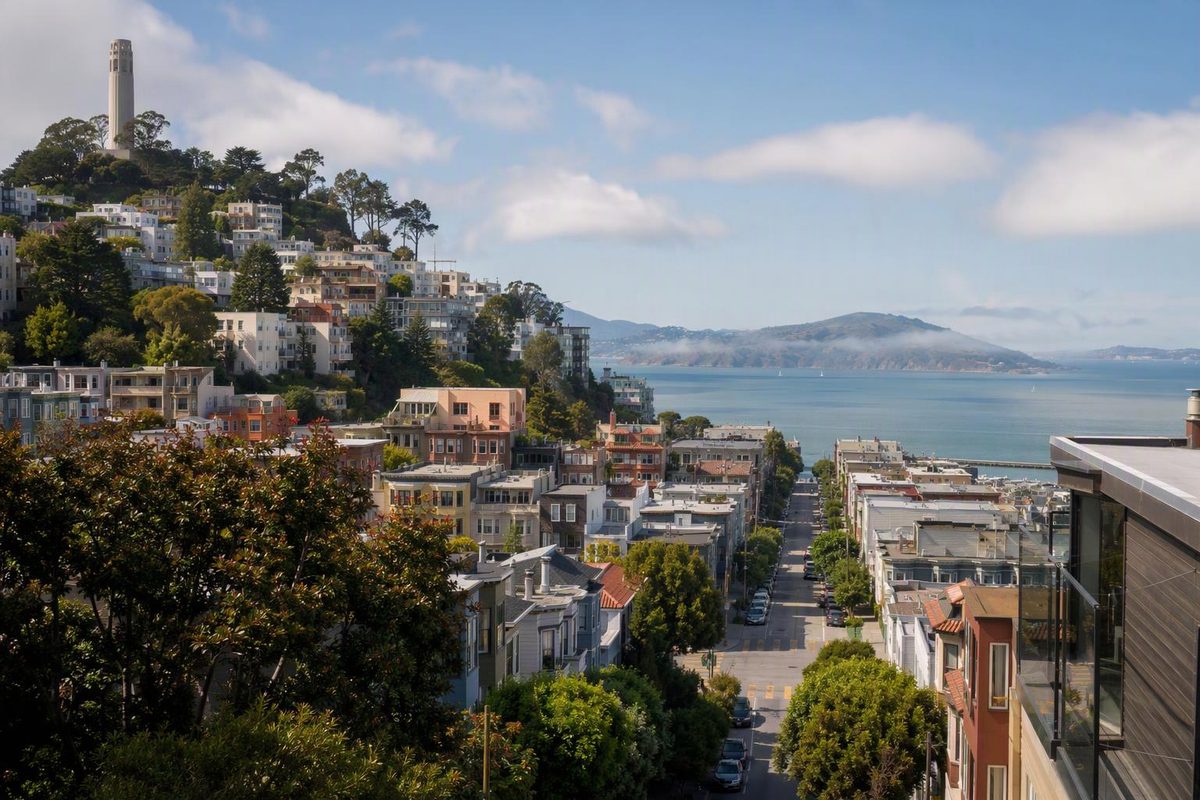
For a first visit, choose Russian Hill for Lombard Street, Nob Hill for a cable-car-and-landmarks outing, or Telegraph Hill for Coit Tower. Save Twin Peaks for clear weather and a separate excursion—not an extra stop on a downtown walk.
The useful distinction is between distance and effort. A few blocks can include a substantial climb; a longer waterfront walk can be easier. Plan the ride uphill first, then decide whether a downhill walk suits your group. You do not need to climb every hill to enjoy the city.
Which San Francisco hill fits your day?
| Hill | Choose it for | Hill-smart approach |
|---|---|---|
| Nob Hill | Grace Cathedral, Huntington Park and classic hotel architecture | Ride up California Street, explore the crest, then walk or ride down. These landmarks cluster around the top. City park details. |
| Russian Hill | Lombard Street’s famous curves | Arrive at Hyde Street, the upper end, rather than approaching uphill from North Beach. The crooked block lies between Hyde and Leavenworth. Lombard location and access. |
| Telegraph Hill | Coit Tower and a garden-lined stairway walk | Take the 39 Coit bus to the tower; descend on foot only if long stairs suit you. 39 Coit route. |
| Pacific Heights | A neighborhood-and-view outing around Broadway | Treat the connection to the Marina as a hill walk, not a flat shortcut. The Fillmore Street Steps connect Pacific Heights with Cow Hollow and the Marina. Stairway details. |
| Twin Peaks | A broad city panorama and exposed hilltop trails | Make it a dedicated viewpoint or hiking trip. The park has a 0.7-mile trail network ascending the peaks, separate from your journey there. Official park guide. |
Which is highest? Mount Davidson is higher than Twin Peaks; Recreation and Parks lists Twin Peaks at 922 feet and second only to Mount Davidson. That elevation is height above sea level—not the amount you will climb from a particular starting point. City park information.
Three manageable hill outings
Choose one of these as a sightseeing block. If you combine them, plan the connections rather than assuming the walks between hills will be easy.
Nob Hill: ride up, explore the top
Board the California cable car westbound toward Van Ness at California and Drumm. Get off at Taylor for the Grace Cathedral and Huntington Park area. California cable-car stops.
After exploring, either ride back toward the Embarcadero or continue downhill toward Union Square. Check the full walking route before committing: reaching the bottom is useful only if your next stop is there.
Russian Hill: Lombard from the upper end
Take the Powell–Hyde cable car to Hyde and Lombard. Both directions serve that intersection. SFMTA stops.
Look out from the upper end, then descend the pedestrian stairs beside the curves to Leavenworth. This is not a step-free downhill sidewalk. Walking access details. Stay out of the roadway and keep residential driveways clear. Lombard visitor guidance.
From the lower end, continue east toward North Beach rather than returning to Hyde just to retrace your arrival. If the stairs or steep descent are unsuitable, enjoy the upper view and continue by transit instead. Our Lombard Street guide compares the visit options in more detail.
Telegraph Hill: bus up, one descent
Use the 39 Coit toward Coit Tower, boarding at a listed stop such as Union and Columbus. It reaches the tower itself—not merely the neighborhood below. As of October 11, 2026, SFMTA lists daily service from 9 a.m. to 7 p.m.; consult the route page for current arrivals and temporary changes. 39 Coit service.
After your tower visit, choose either the bus back down or the Greenwich Street Steps toward Battery and Greenwich. San Francisco Travel describes these stairs as steep and long, with handrails on both sides. They are a scenic descent, not a low-effort or step-free route. Greenwich stairway details.
See the Coit Tower visiting guide before adding the tower’s observation deck to your plan.
When walking downhill is not the answer
For sore knees, limited balance, luggage or a stroller, “downhill” does not necessarily mean “easy.” Inspect stairs and the final approach as well as the uphill portion. Cable cars are not equipped with accessible boarding, so they are not a substitute for an accessible-transit plan. SFMTA riding guidance.
Twin Peaks also needs a separate access decision. The city lists nearby Muni service on Crestline Drive and Portola Drive, but those approaches are not a bus delivery to the summit overlook. Expect additional walking and climbing if arriving that way. Twin Peaks access information.
For a hotel, check the exact entrance and route from transit, not just the neighborhood name. A hilltop outing is optional; a climb back to your room can repeat every day. Use our where-to-stay comparison to match your base to your plans.
A lower-effort and bad-weather alternative
If you want outdoor views without a hill climb, choose Crissy Field’s flat, hard-packed promenade. Keep the outing at waterfront level rather than automatically extending it uphill to the bridge. National Park Service description.
If fog obscures the hilltops, or rain and wind make exposed walks unappealing, skip Twin Peaks—the city specifically warns hikers to expect strong winds there. Instead, browse the Ferry Building Marketplace indoors and add only as much waterfront walking as conditions allow. It is at the foot of Market Street, near Embarcadero transit; individual merchants keep their own hours. Twin Peaks conditions and Ferry Building visitor information.